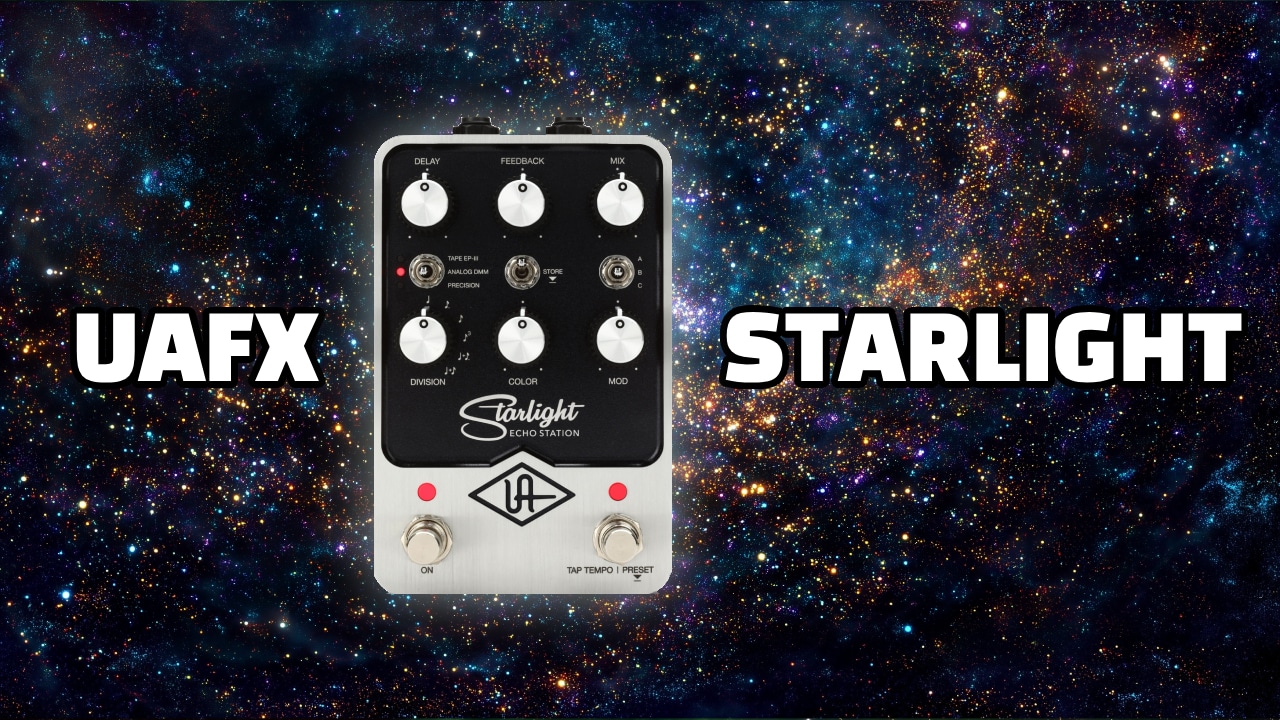
UNIVERSAL AUDIO UAFX STARLIGHT OVERVIEW
The UAFX Starlight Echo Station is designed as a comprehensive delay workstation, offering detailed emulations of several historically significant echo units. At its core are three main algorithms: the tape-based Echoplex EP-3, the bucket-brigade Deluxe Memory Man, and Universal Audio’s own “Precision Delay,” which models the characteristics of early digital rack units. After registering the pedal, users can also download an additional algorithm based on the Cooper Time Cube—an unconventional, garden-hose-based delay from the 1970s that became a studio favorite for its unique, spatial doubling effect. These models are presented with a high degree of attention to the behaviors and tonal signatures of the original hardware.
This multi-engine approach makes the Starlight a flexible tool for musicians working across a wide range of styles. It can move from the saturated, slightly unpredictable qualities of magnetic tape delay to the darker, more modulated traits of analog bucket-brigade circuits, and then to clean, precisely timed repeats suitable for rhythmic or ambient applications. The downloadable Time Cube mode adds another distinctive option, particularly for users interested in vintage studio effects or sound-design applications.
Because the pedal allows these different delay types to be accessed quickly and shaped with familiar parameters, the Starlight functions well both as an all-purpose delay and as a focused study in the characteristics of classic echo technologies.
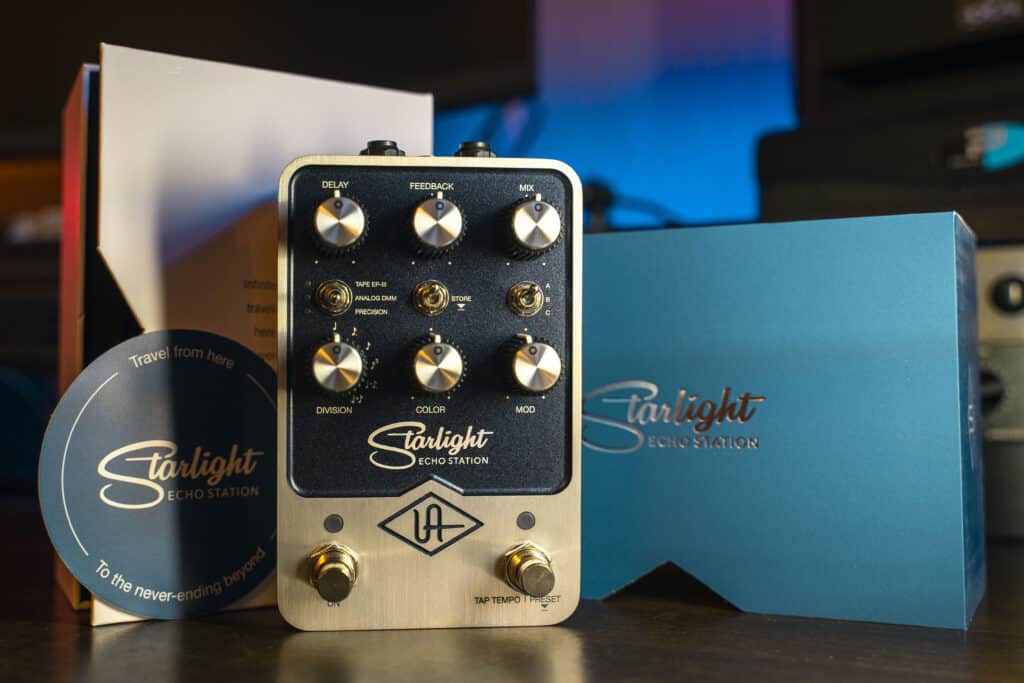
The Starlight’s gorgeous packaging is only outdone by its sound quality.
A COLLECTION OF LEGENDS
The Starlight Echo Station brings together four historically significant and sonically distinct delay types, giving you a wide palette of echoes and modulation all in one robust pedal. Let’s have a look at the different units this pedal emulates.
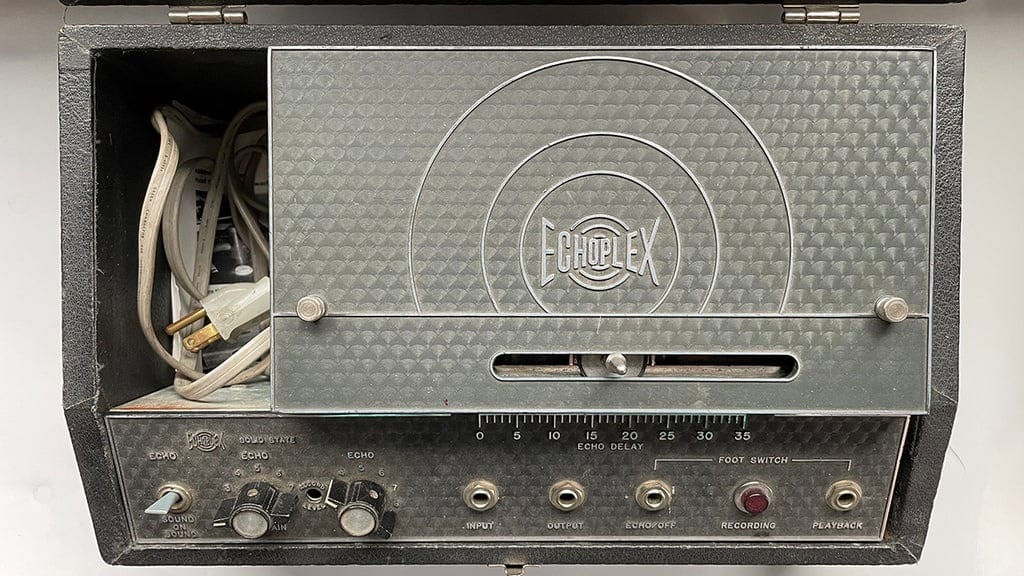
Echoplex EP-3
Starlight’s Tape EP-III mode is a deep and faithful recreation of the classic Echoplex EP-3 tape echo unit. This emulation captures not just the core delay behavior, but also the random wow and flutter of the tape transport, tape splice artifacts, and the tonal coloration of the original preamp. You also get three “tape machine” variations — New, Used, and Worn — so you can dial in anything from bright, clean repeats to dark, gritty saturation with aged-tape character.
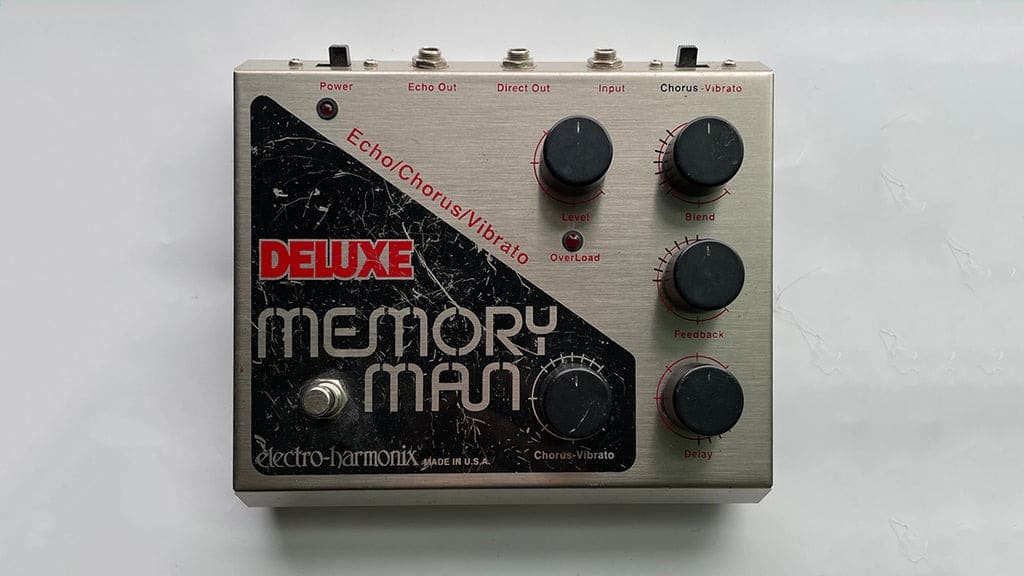
Deluxe Memory Man
Starlight’s “Analog DMM” (bucket-brigade delay) emulation channels the iconic Deluxe Memory Man vibe, complete with modulation options. UA says it modeled multiple vintage units, replicating the original’s lush chorus and vibrato behavior, the unpredictable clock behavior (“clock rate dumping”), and that warm, hazy decay that defined analog BBD echoes. The delay time extends beyond the limits of many vintage units, too, giving you more flexibility without losing the character of the original.
Precision Delay
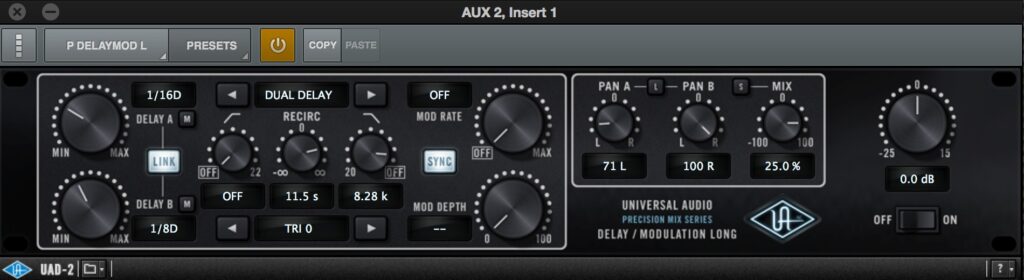
The “Precision” effect on Starlight is a modern, high-fidelity digital delay informed by UAD’s plugin of the same name. UA describes it as providing pristine, mirror-image repeats with modulation options like flanging and chorusing — a sound that’s clean, studio-grade, and very flexible. Because the Delay knob for Precision spans a wide range (120–1500 ms), you can create everything from tight rhythmic echoes to long ambient washes.
Cooper Time Cube
The bonus “Cooper Time Cube” mode (available after registering the pedal) emulates an electromechanical delay designed by Duane Cooper and Bill Putnam in the early ’70s. Starlight’s version captures the original’s characterful doubling effect — but with a huge extension of range. While the real device used meters of coiled garden hose to create very short delays, the emulation supports delay times up to 2.5 seconds. You can filter the repeats (via treble and bass controls) and choose among three “variations” that influence how the effect colors your signal, making the Cube feel both vintage-weird and usefully musical.
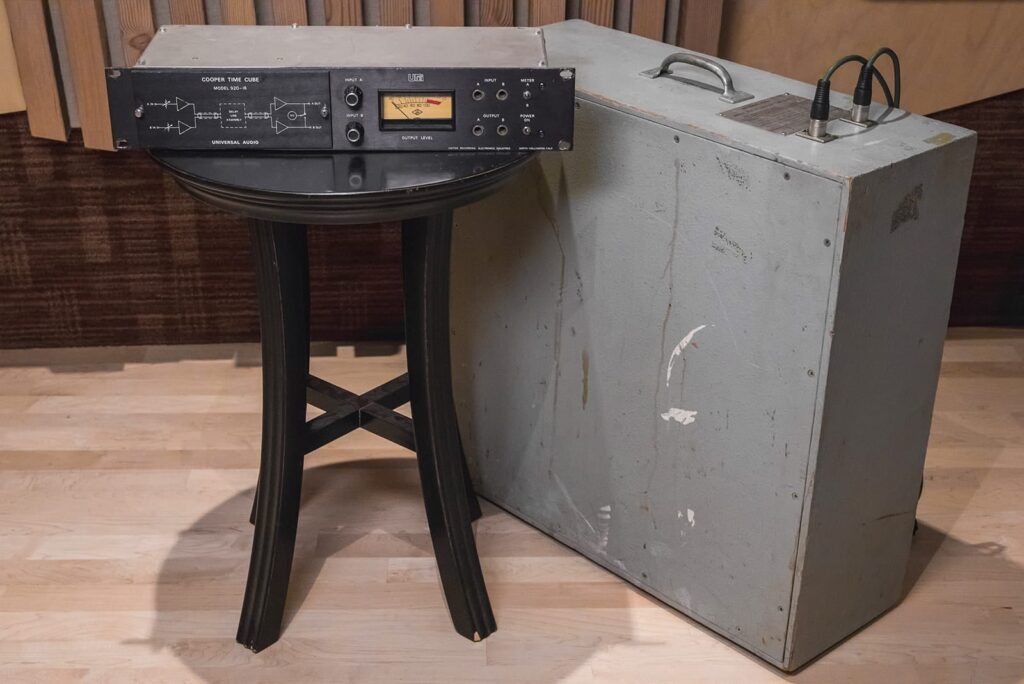
The Cooper Timecube Delay Hardware Unit, which gets its distinct delay sound from…
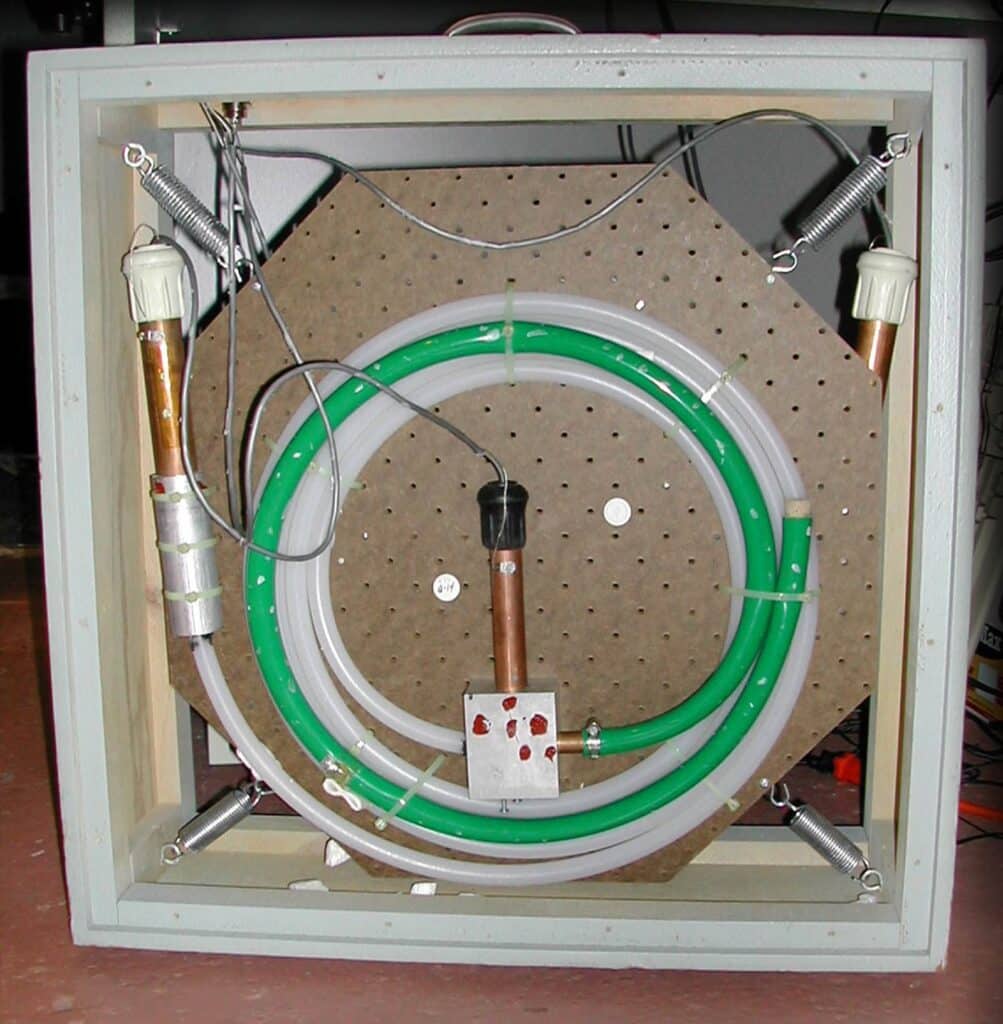
…A Garden Hose
CONSTRUCTION AND DESIGN
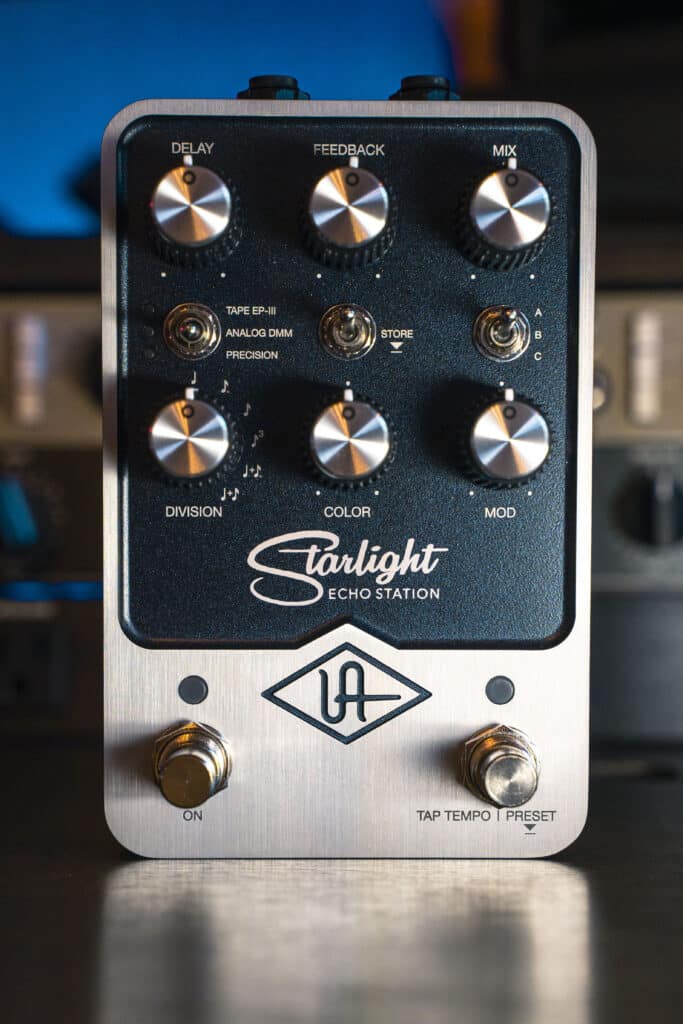
Universal Audio’s UAFX line has a distinct aesthetic and build philosophy, and alongside other time-based effects like the Galaxy ’74 and Orion, the Starlight Echo Station fits right in. The enclosure is solid, weighty, and clearly designed for stage and studio use. Its metal chassis, switches and knobs feel deliberate and well-engineered—firm enough to avoid accidental movement, but smooth enough to encourage real-time tweaking. Like other pedals in the series, the Starlight strikes a balance between vintage-inspired looks and modern practicality, with clean labeling, intuitive color-coding, and a layout that makes sense even before reading the manual.
Despite offering multiple delay engines and plenty of deep behavior under the hood, the surface controls are intentionally straightforward. The core knobs—Delay, Feedback, Mix, Color, and Mod—are arranged logically, with a three-way switch to choose between delay types and a second switch for variations within each model. This makes it easy to jump between EP-3 echo warmth, BBD modulation, and pristine digital repeats without menu diving or shift-functions. Even players who prefer simple, one-sound pedals should find the Starlight un-intimidating.
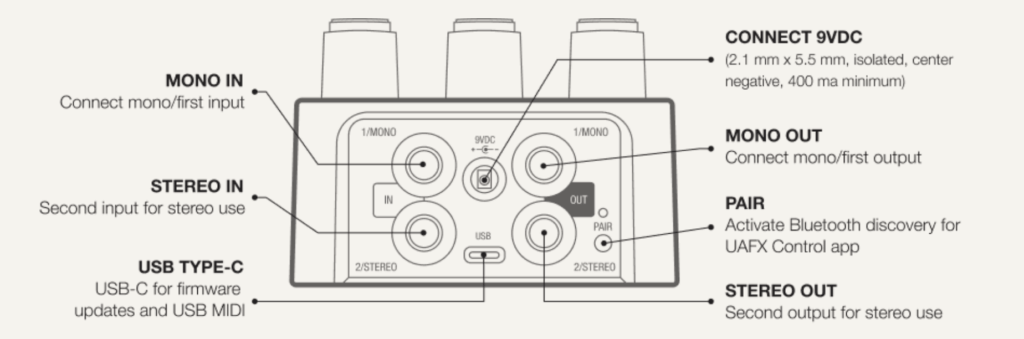
Connectivity is similarly thoughtful. Stereo inputs and outputs allow the pedal to live comfortably in modern rigs, whether on a pedalboard, in an effects loop, or integrated into a studio patch bay. The USB-C port enables firmware updates and access to the bonus Cooper Time Cube model, while the input for an external switch or expression pedal expands its functionality for players who want tap tempo or real-time parameter control. Taken together, the Starlight’s construction and design communicate what UA aimed for: a premium, durable multi-delay unit that stays easy to operate while offering professional-level versatility.
CONTROLS
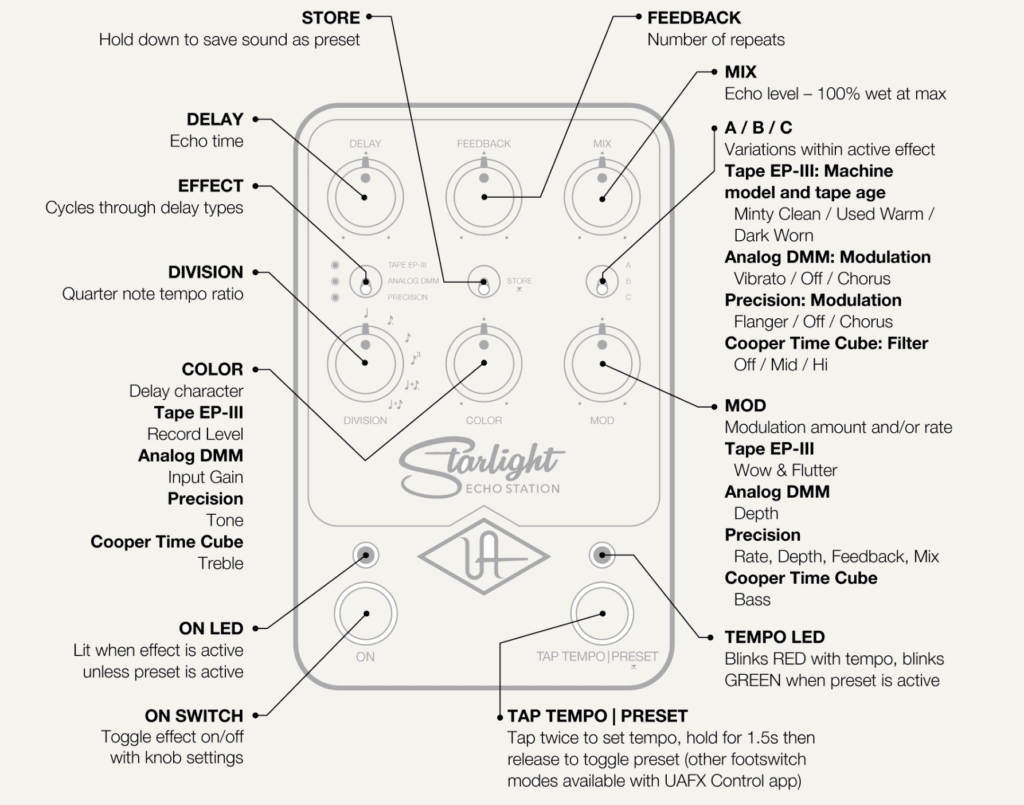
The Starlight Echo Station offers a wide range of tweakable parameters, but its control layout remains intuitive and consistent across all delay types. While each model responds a bit differently—reflecting the quirks of the hardware it emulates—the fundamental controls operate similarly from one mode to the next. Worth noting is UAD just announced that all Dual Footswitch UAFX pedals are now MIDI-capable, expanding the flexibility of this already impressive unit.
Delay
This knob sets the delay time, with available ranges varying by effect. The Tape EP-III and Analog DMM models offer shorter, more character-driven delay times, while the Precision and Cooper Time Cube expand into long, clean repeats. Depending on the effect, changing delay time may introduce pitch-shifting artifacts, just like the original hardware. Delay time can also be entered via tap tempo using the right footswitch.
Effect — Delay Time Range — Pitch Response
Tape EP-III — 80–700 ms — Pitch changes
Analog DMM — 110–1068 ms — Pitch changes
Precision — 120–1500 ms — No*
Cooper Time Cube — 120–2500 ms — No
*Certain presets may introduce pitch shifts depending on coloration settings.
When switching between effects at long delay times, the Starlight automatically adjusts to stay within each model’s maximum available range.
Feedback
Controls the number of repeats. Both the EP-III and DMM models can self-oscillate at high feedback levels, producing the classic runaway echo effects associated with those circuits. The Precision model behaves differently, sustaining indefinitely at maximum settings without spiraling into true oscillation. Because runaway audio behaves realistically, stopping it requires switching to the originating mode or lowering Feedback within that same mode.
Mix
Sets the balance between dry and delayed signal. At fully clockwise, Starlight becomes 100% wet. For the Precision delay—with preamp coloration engaged—the Mix knob functions as a more complex wet/dry blend, with different behaviors above and below the noon position. Users may notice minor level shifts depending on the coloration setting.
Division
Controls delay subdivisions relative to the tapped or set tempo. Available divisions include quarter notes, dotted eighths, eighths, triplets, and two dual-delay options that combine multiple rhythmic feels. The right footswitch LED always flashes quarter notes for reference.
Color
Adjusts the tonal or behavioral character of the active delay model. Depending on the selection, this may influence preamp drive, filtering, or tonal shaping.
Mod
Adds modulation to the delayed signal, affecting depth and/or rate depending on the active effect. For the Analog DMM and Precision (variation B), modulation is not available; the Starlight signals this by rapidly blinking the Effect Type LED when the Mod knob is turned.
Effect Type
The central switch that selects between delay engines. Cycling through the positions moves through Tape EP-III, Analog DMM, Precision, and, if registered, the bonus Cooper Time Cube. A red LED indicates a factory-labeled effect; a green LED indicates the Cooper model.
Store
Holding the Store switch saves the current configuration as the preset. This allows players to instantly recall a favorite setup without re-dialing controls.
Variation A/B/C
Each delay type includes three internal variations—essentially alternate voicings that highlight different behaviors of the original hardware or plugin. These can include changes to preamp response, filtering, modulation characteristics, or delay head combinations.
Left Footswitch + LED
Engages or bypasses the pedal in Live mode. The LED glows red to indicate the active state.
Right Footswitch + LED
Can be configured for preset recall, tap tempo, or a combination of both. The LED color indicates whether you’re in Live or Preset mode, and blinks at the current tempo.
Together, these controls provide deep flexibility while keeping hands-on operation simple. Each model behaves authentically, yet the pedal’s layout ensures that switching between classic analog warmth, tape coloration, or pristine digital delays never feels complicated.
SOUND QUALITY AND APPLICATIONS
The Starlight Echo Station is designed to reproduce the sonic fingerprints of several iconic delay units, and each mode delivers its own distinct feel. While the pedal is certainly capable of extreme and atmospheric effects, its real strength lies in how accurately it captures the tonal nuance, modulation behavior, and dynamic response of the original devices, and in glorious stereo. This makes it useful for guitarists, obviously, but extends the capabilities to keyboardists, producers, and anyone working with outboard effects in the studio.
Tape EP-III
The EP-3 model delivers the warm, compressed, slightly overdriven tone that decades of players have relied on. The repeats are rounded and mellow, with a gentle high-frequency rolloff and subtle modulation caused by mechanical tape irregularities. It excels at everything from slapback and early rockabilly echoes to long, drifting ambient repeats with musical pitch drift when delay time is adjusted. The preamp coloration adds harmonic richness—even when delay is minimized—making it useful as both an effect and a tone-shaping tool. In practice, this model works beautifully for vintage-leaning guitar tones, synth leads, and even re-amping vocals to add analog movement and presence.
Analog DMM
The Deluxe Memory Man emulation captures the unmistakable grainy texture of late-1970s bucket-brigade delays. Repeats soften and darken as they decay, and the built-in modulation adds the classic detuned wobble that made the original a favorite among ambient and experimental players. This mode lends itself to lush chorus-like textures, gentle pitch swirls, or rhythmic echoes that blend into a mix. It’s particularly effective on clean electric guitars, electric pianos, pads, and anything that benefits from a warm, evolving delay tail. Because the repeats degrade organically, the DMM model tends to sit behind the dry signal in a pleasing, musical way.
Precision Delay
As the cleanest and most modern-sounding option, the Precision model offers pristine, extended repeats without pitch fluctuation or filtering—ideal for players who want clarity without coloration. It handles rhythmic delay patterns, looping-style textures, and long digital echoes with ease. With preamp coloration enabled, the Precision can introduce subtle saturation, making it flexible for both transparent digital use and slightly warmer hybrid tones. It’s well suited for contemporary styles, complex rhythmic playing, synth arpeggios, and studio applications where repeat definition and timing accuracy matter.
Cooper Time Cube (Bonus Model)
Once registered, users gain access to the Cooper Time Cube emulation, a recreation of the unique garden-hose-based acoustic delay design. Its character is immediate and distinct: short, thickened echoes with a sense of physical space and a slightly “hollow” resonance. Instead of long-tail repeats, the Cooper excels at doubling, spatial widening, vocal thickening, and subtle movement. Keyboardists, producers, and mixing engineers often find this mode especially appealing for enhancing presence without adding clutter. On guitar, it provides a quirky, vintage-studio texture that stands apart from the more common tape or analog delays.
Across all modes, Starlight maintains excellent dynamic response, low noise, and a natural feel that adapts well to different instruments and gain structures. Whether it’s classic rock slapback, modulated ambient trails, precise digital echoes, or short studio-style widening, the pedal covers an impressive range of musical applications with authentic sonic behavior.
FINAL THOUGHTS
The Starlight Echo Station stands out as one of the most versatile and thoughtfully designed delay pedals available today. Universal Audio’s approach—building dedicated, deeply modeled engines for each delay type—results in a pedal that doesn’t merely gesture toward classic tones, but captures the personality and behavior of the original units in a convincing and musically useful way. From the tape saturation and gentle pitch drift of the EP-3, to the warbly, decaying warmth of the Deluxe Memory Man, to the pristine clarity of the Precision delay and the distinctive spatial character of the Cooper Time Cube, each mode feels complete and fully realized.
What makes Starlight particularly compelling is how easily it moves between these identities. Players who need a single, reliable delay sound will find it straightforward and intuitive, while those who like to explore different textures and performance styles will appreciate the depth available in each model and its variations. The pedal works equally well for guitarists, keyboardists, and studio users, thanks to its low noise floor, strong stereo implementation, and authentic response to dynamics and modulation.
For musicians seeking a delay that can adapt to multiple genres, instruments, and creative workflows, the Starlight Echo Station is an excellent choice. It offers a curated collection of legendary sounds in one rugged, stage-ready enclosure—making it a powerful tool for anyone who values flexibility without sacrificing tone.
ABOUT THE AUTHOR
Ian Vargo is a Music Producer, Mix & Mastering Engineer, and Multi-Instrumentalist whose work has been heard on broadcast television, nationally televised ad campaigns, award-winning films, and viral web content amassing over 30 million views. His credits include projects for Disney | ABC, Intel, MSNBC, Airbnb, EA Games, and many more.
With over 20 years of experience in the studio, Ian has contributed to major label releases (Capitol, EMI, Fueled by Ramen, Universal, Interscope, Hollywood Records) as well as acclaimed independent projects. His passion lies in helping artists translate their creative vision into professional, release-ready recordings that stand out in today’s music landscape.
Interested in working together? Reach out at ianvargo@gmail.comif you need mixing or mastering for your next project.