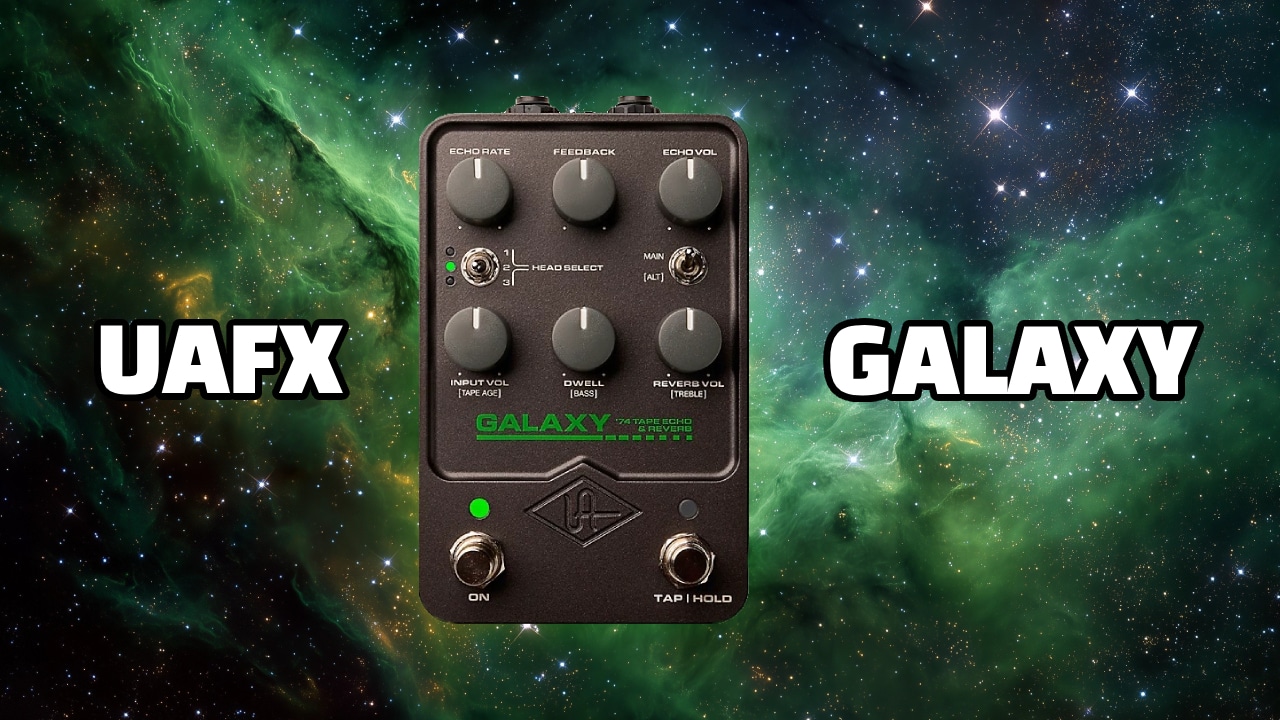
UNIVERSAL AUDIO UAFX GALAXY ’74 OVERVIEW
The Universal Audio UAFX Galaxy ’74 is a thrilling, stage and studio-quality stompbox that nails the mid-’70s Space Echo vibe while adding modern features, stereo depth, and high performance flexibility. If you want wonderfully gritty tape textures, authentic spring reverb, and rock-solid build that belongs on a pedalboard or studio desk, the Galaxy ’74 is a winner.
Standing on the Shoulders of a Giant: The Original Roland Space Echo
Roland’s original Space Echo, most famously the RE-201 introduced in 1974, remains one of the most iconic time-based effects ever created. Building on earlier tape-delay concepts, the Space Echo refined the format into a rugged, portable unit that musicians could rely on night after night. It used a continuous tape loop running across multiple playback heads, allowing players to dial in everything from short slapbacks to long, wandering rhythmic echoes. What set it apart wasn’t just the functionality but the character: slight pitch modulation from the motor, organic saturation from the preamp, and a physically reactive spring reverb that added a metallic, dub-like depth. It was a machine that sounded alive.
Over time, the Space Echo became a staple in studios and on stages across genres. Dub pioneers like King Tubby and Lee “Scratch” Perry exploited its self-oscillation for psychedelic soundscapes; post-punk and new wave artists leaned on its atmospheric trails; and ambient, shoegaze, and experimental musicians continue to revere it for its unpredictable musicality. Even in pristine, high-end studios, the Space Echo stood out because its imperfections were its magic. No two units sounded exactly alike, the tape constantly aged, and the motor introduced gentle warble—but these quirks created echoes that felt warm, three-dimensional, and human.
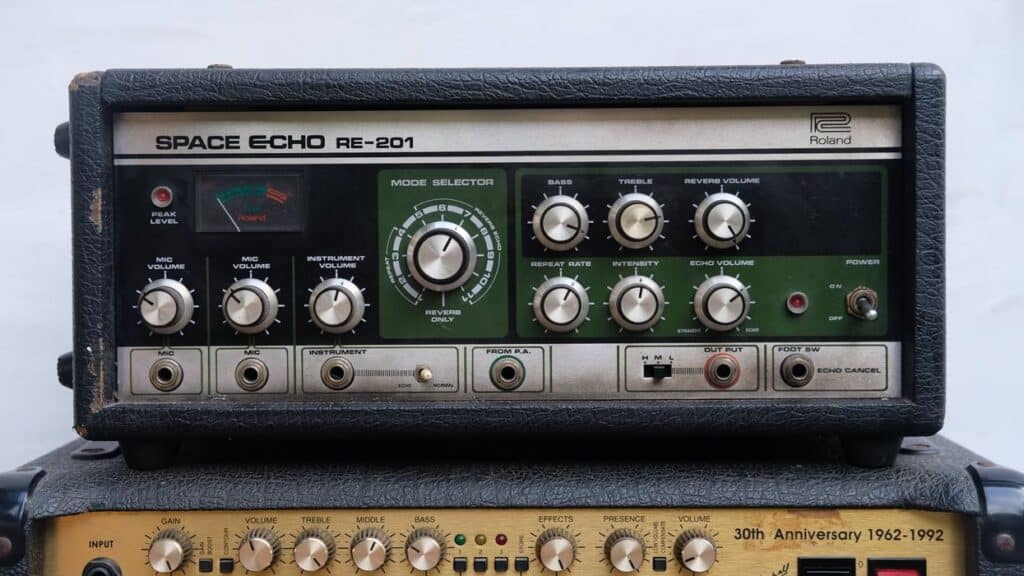
The legendary RE-201 Space Echo—emulated countless times in plugins and pedals, but never as faithfully as the UAFX Galaxy ’74.
As digital effects began to dominate, the Space Echo’s charm only grew. Players realized that no algorithm fully captured the unstable, harmonic-rich behavior of real magnetic tape interacting with a spring tank. That’s why the RE-201 achieved near-mythic status: it wasn’t just a delay; it was an instrument, a living system that added personality to anything run through it. Its legacy continues in modern hardware and emulations that aim to bring that unmistakable 1970s tape echo spirit into contemporary workflows.
Universal Audio built Galaxy ’74 to be an “instant classic”: two independent Space-Echo style engines, authentic multi-head tape behavior (wow, flutter, saturation), spring reverb modeled from the original hardware, full analog-dry-through signal path, and deep footswitch / app control. In practice it sounds and behaves like a real piece of vintage studio gear — but with doubled delay times, stereo immersion, silent switching, and modern performance modes that make it usable live or in the studio.
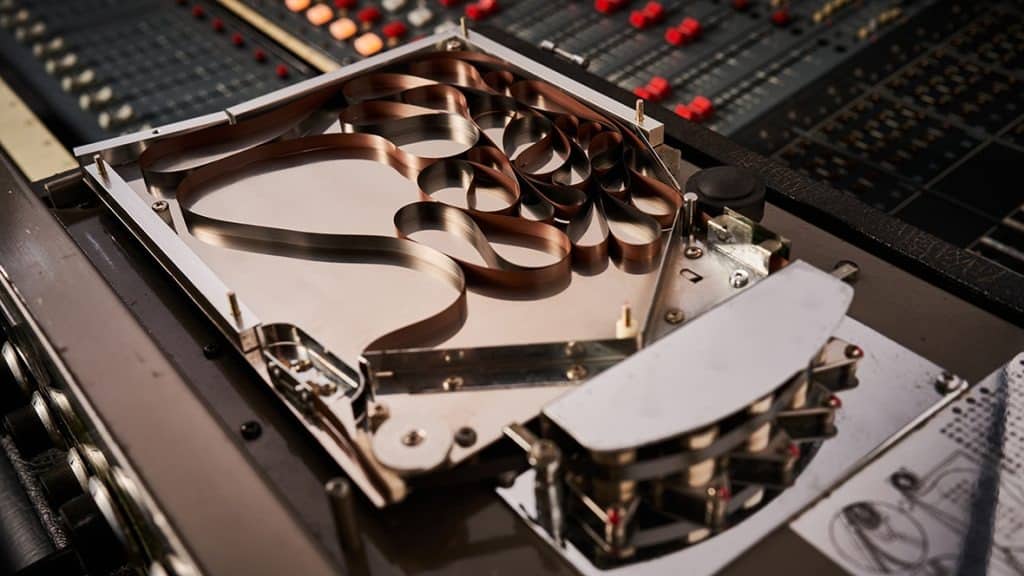
Inside a vintage RE-201: the tape loop, rollers, and transport mechanism that gave the Space Echo its unmistakable sound.
CONSTRUCTION AND DESIGN
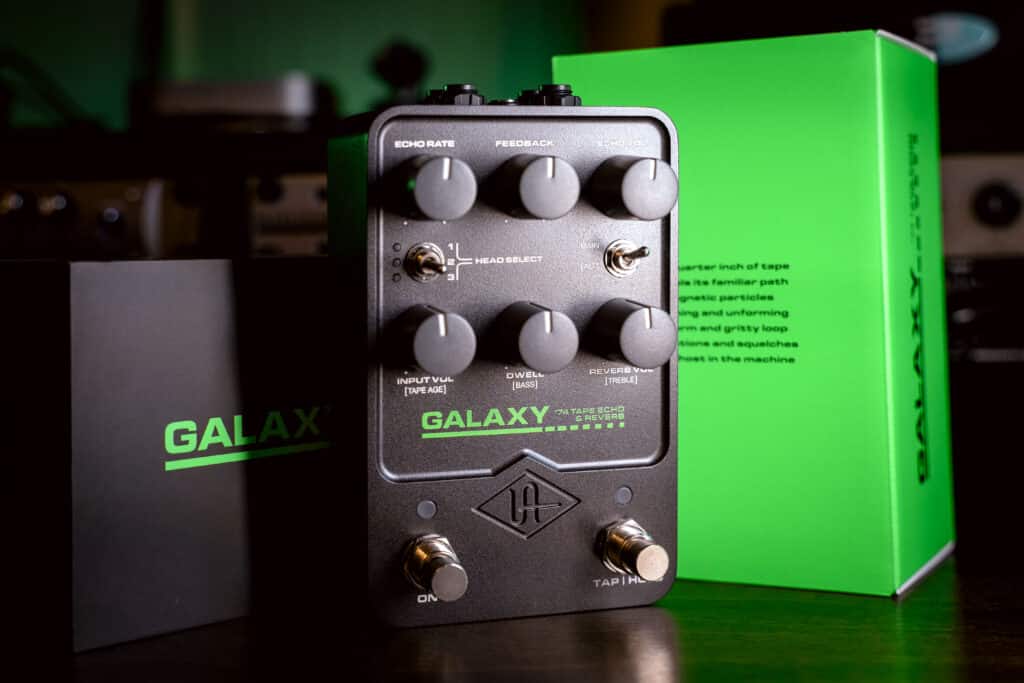
From the moment you unbox the UAFX Galaxy ’74, it’s obvious that Universal Audio treats pedal design with the same reverence they bring to their studio hardware. The presentation feels premium without being flashy—everything is neatly packed, thoughtfully protected, and immediately conveys that this is a piece of gear meant to last. Lifting the pedal out of the box, the first impression is its reassuring weight. It feels dense, solid, and purpose-built, more like a boutique studio tool than a stompbox.
Visually, the Galaxy ’74 is striking. UA has captured the retro-futuristic spirit of ’70s tape hardware without resorting to nostalgia gimmicks. The metal enclosure has a smooth, refined finish, and the typography, color palette, and iconography all feel tastefully vintage without being kitschy. On a pedalboard, it looks like a piece of pro equipment—clean, timeless, and carefully thought out. It’s the kind of pedal that invites you to reach down and interact with it.
Tactile response is equally impressive. The knobs have a perfect balance of resistance and smooth rotation, making fine adjustments easy whether you’re standing, sitting, or tweaking in the studio. The footswitches are solid, responsive, and built to handle constant use. Even the toggle switch and Alt functions feel refined rather than cluttered. The top-panel layout is one of the Galaxy’s underrated strengths: everything is immediately intuitive, with controls grouped logically between the tape, reverb, and performance functions. It’s designed so you can explore deep, complex tones without ever feeling lost or slowed down.
Overall, Galaxy ’74’s construction and design reflect Universal Audio’s commitment to professional-grade craftsmanship. It’s a pedal that looks beautiful, feels premium, and inspires confidence before you even plug it in.
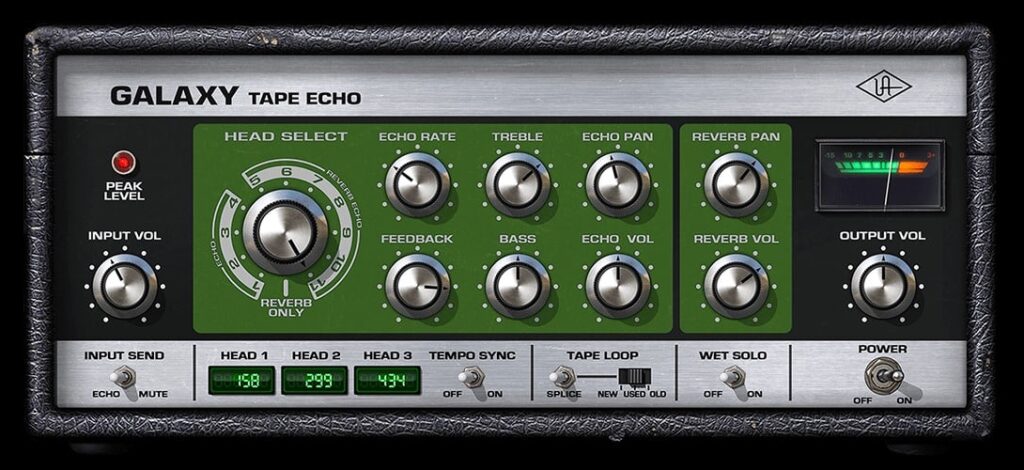
The UAD Galaxy Tape Echo Plugin
CONTROLS
Galaxy ’74 provides an intuitive, musician-friendly control layout that puts every key tape and spring parameter right at your fingertips. Even though it’s capable of deep, authentic behaviors, the pedal never feels overwhelming. Each knob, switch, and footswitch serves a clear purpose, and once you spend a few minutes with it, the interface becomes second nature. Worth noting is UAD just announced that all Dual Footswitch UAFX pedals are now MIDI-capable, expanding the flexibility of this already impressive unit.

Echo Rate
This knob sets the delay time for the three virtual tape heads. When tap tempo is enabled, the right footswitch controls the quarter-note delay time (the third tape head, indicated by the bottom LED on the Head Select switch). Changing delay times produces the same pitch-ramping behavior as a real tape transport: echoes drift up or down in pitch and “catch up” to the new tempo with a beautifully organic wobble.
Tape head subdivisions & ranges:
-
Head 1 – Dotted 16th: 69–354 ms
-
Head 2 – Dotted 8th: 131–672 ms
-
Head 3 – Quarter note: 189–974 ms
Feedback
Controls how many repeats you get. Low settings produce tight, controlled echoes; turn it up and Galaxy moves into the musical, gradually saturating repeats that make the original Space Echo so beloved. At high settings the unit will self-oscillate—intentionally. If you need to tame runaway feedback, simply turn the knob down to minimum.
Echo Vol
Sets the level of the echo signal relative to your dry tone. Pushing this control all the way clockwise gives you a 100% wet signal—perfect for ambient swells, synths, or using Galaxy as an external effects processor.
Input Vol / Tape Age
This knob changes function depending on the Main / Alt switch position.
-
MAIN: Controls how hard your signal hits the virtual tape. At its lowest setting, nothing is fed into the delay line.
-
ALT: Adjusts the simulated tape age. Increase it for more wear, wow, flutter, and harmonic grunge.
Dwell / Bass
Again dependent on Main or Alt mode:
-
MAIN: Sets the drive into the spring reverb tank, from subtle ambience to heavy, dub-style clang.
-
ALT: Controls the echo low-frequency EQ. Noon is flat.
Reverb Vol / Treble
-
MAIN: Adjusts the overall level of the spring reverb mixed with your dry signal.
-
ALT: Shapes the high-frequency content of the echoes. Noon is flat here as well.
Head Select Switch
Cycles through all available tape head combinations. Any single head or combination of heads can be selected, and the LEDs make it immediately clear which heads are active. This is one of the pedal’s most musical features, enabling rhythmic interplay and classic multi-head delay textures.
Main / Alt Switch
Toggles between the primary functions of the knobs and their secondary sound-shaping options. Alt settings persist once saved, so you can set your deeper parameters once and return to the main panel for everyday use.
Left Footswitch
Depending on the selected mode, this switch either toggles the entire effect on/off or enables/disables only the delay. The LED reflects the current state so you always know what’s active.
Right Footswitch
A quick tap (twice or more) sets the tempo when tap tempo is enabled. In Delay + Reverb mode, a single press toggles the spring reverb. Press and hold to engage the Galaxy’s performance effect—by default this is Feedback Swell, which ramps the repeats into musical, controllable chaos.
Right Footswitch LED
In standard operation, this LED blinks at the current quarter-note tempo. In Delay + Reverb mode, it stays steadily lit whenever the reverb is active.
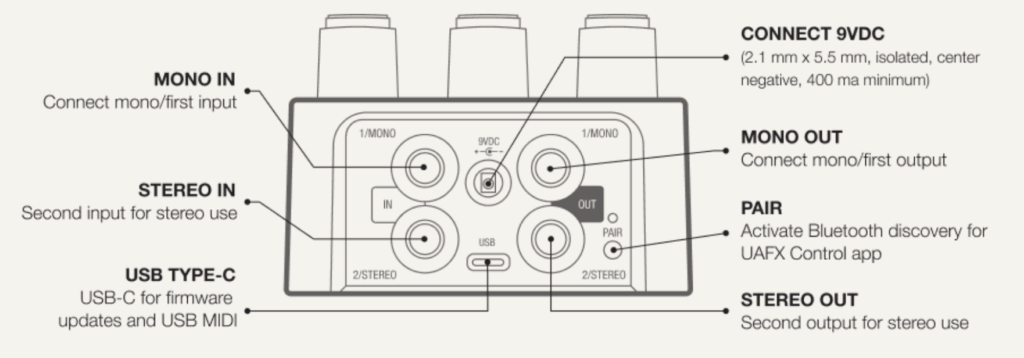
SOUND AND PERFORMANCE
Universal Audio has built a reputation for world-class emulations, but the Galaxy ’74 feels like a statement piece even by their standards. From the first repeat, it’s obvious this is a remarkably faithful recreation of the nonlinear, harmonically rich behavior that made the original Space Echo so magical. The echoes breathe and wobble with subtle pitch drift, the preamp saturates with musical compression, and the reverb blooms with that unmistakable spring tank splash. It genuinely captures the feeling of sending your signal into a living, mechanical device.
I started by using the Galaxy in a more traditional way, simply running my guitar through it, and find it important to keep the unit high enough so that I can play with both my instrument and the pedal at the same time. I’ve found the lush repeats and hazy spring reverb inspiring, forcing me to play things outside my comfort zone, and allowing me to create minutes-long soundscapes.
I’ve also used the Galaxy more creatively, connecting a variety of instruments like synthesizer and omnichord to it. I also re-amped signals out of my DAW into it, processing vocals, drums, piano, and much more with it. The Galaxy always adds texture, richness, and a deep space of to sources, and is so much fun to fiddle with. I can see it being used across genres and instruments. Guitarists will immediately appreciate how it excels at classic slapback, dub-style runaway feedback, and long, dreamy ambient trails. But it’s equally at home in more modern contexts: shoegaze textures, synth arpeggios, lo-fi hip-hop atmospheres, cinematic drones, and experimental sound design all benefit from the Galaxy’s deep tonal palette. Keys players, vocalists, and producers can incorporate the pedal and get a tape echo that rivals studio hardware.
What truly elevates the Galaxy ’74 is how responsive it feels. Adjusting delay time introduces real tape-style pitch ramps, not the sterile crossfading of many modern delays. Feedback behaves organically, moving from gentle repeats to thick, blooming saturation before spiraling into self-oscillation. The spring reverb is equally impressive: bouncy, metallic, and full of vintage character, yet never muddy or overpowering. Whether used subtly or pushed into extremes, the Galaxy reacts musically, rewarding players who interact with it in real time. In a crowded field of tape echo emulations, the Galaxy ’74 stands out because it doesn’t just mimic the Space Echo—it captures its spirit. It feels authentic, dynamic, and inspiring in a way that invites experimentation, no matter what instrument you plug into it or what style you’re working in.

Studio innovator and dub legend Lee ‘Scratch’ Perry with an RE-201
UAFX GALAXY ’74 FINAL THOUGHTS
Universal Audio’s Galaxy ’74 is one of those rare stompboxes that actually earns the vintage pedigree it invokes. It captures the warm grit, pitch variations, and springy chaos of the original mid-’70s Space Echo designs, while adding stereo depth, extended delay ranges, and performance features that make it a real workhorse. Construction and ergonomics are top notch, and the interaction between tape engine and spring reverb yields musical results: from subtle tone-fattening to psychedelic, runaway oscillations that command attention. For players who want that classic tape-and-spring sound without the upkeep of real tape, Galaxy ’74 is a best-in-class emulation with modern brains. Highly recommended.
ABOUT THE AUTHOR
Ian Vargo is a Music Producer, Mix & Mastering Engineer, and Multi-Instrumentalist whose work has been heard on broadcast television, nationally televised ad campaigns, award-winning films, and viral web content amassing over 30 million views. His credits include projects for Disney | ABC, Intel, MSNBC, Airbnb, EA Games, and many more.
With over 20 years of experience in the studio, Ian has contributed to major label releases (Capitol, EMI, Fueled by Ramen, Universal, Interscope, Hollywood Records) as well as acclaimed independent projects. His passion lies in helping artists translate their creative vision into professional, release-ready recordings that stand out in today’s music landscape.
Interested in working together? Reach out at ianvargo@gmail.comif you need mixing or mastering for your next project.