INTRODUCTION
In this article, I’m undertaking a 2026 Grammy mastering analysis of the songs nominated for Record of the Year at the upcoming Grammy Awards. Mastering has an enormous impact on how music feels in both critical listening environments and everyday playback — whether on high-end monitors in a studio or streamed through earbuds on your commute.
These nominations represent some of the most celebrated recordings of the year: songs with both cultural impact and commercial success. By analyzing their technical mastering specifics — including loudness, true peak levels, and dynamic range — we can frame how contemporary mastering trends align with grammy-level artistry and streaming realities. While how music sounds to the listener is ultimately more important than any numerical measurement, examining the technical side offers insight into the competitive loudness norms of modern music and how these records balance power with musicality.
For this analysis, each track was sourced from high-resolution purchases, ensuring that we’re examining the master release rather than a data compressed streaming file. I listened to these recordings both casually (car speakers, earbuds, and consumer speakers) and critically (studio monitors and reference headphones) before pulling measurements, in order to bridge the subjective experience with objective data.
METHODOLOGY
Similar to my analysis of Golden from KPop Demon Hunters, each nominated song was purchased in high-resolution format from Qobuz, allowing access to lossless files suitable for detailed metering. Where available, I downloaded 24-bit / 48 kHz WAV files to ensure the analysis reflects the highest quality commercially available master. Tracks were then imported into iZotope RX Advanced and a Pro Tools session at the native bit depth and sample rate for further examination.
From there, I analyzed each song’s waveform and loudness characteristics, paying close attention to the following parameters:
-
Integrated Loudness (LUFS) — the perceived average loudness of the full track
-
True Peak Level (dBTP) — the highest sample-to-sample peak that may exceed the digital full-scale ceiling
-
Loudness Range (LRA) — the variation between the softest and loudest sections of the song
These metrics provide a snapshot of mastering decisions: how loud a track is relative to competitive masters, how aggressively limiting or compression was used, and how much dynamic contrast remains between musical sections. Measurements were cross-checked using iZotope RX Advanced, iZotope Insight 2 and YouLean Loudness Meter to account for minor variations in metering algorithms. It’s mentioning that mixing engineers are generally pushing the limits of loudness as well, so a track’s overall loudness is not only determined by the mastering engineer.
…AND THE NOMINEES ARE
Award to the Artist and to the Producer(s), Recording Engineer(s) and/or Mixer(s) and mastering engineer(s), if other than the artist.
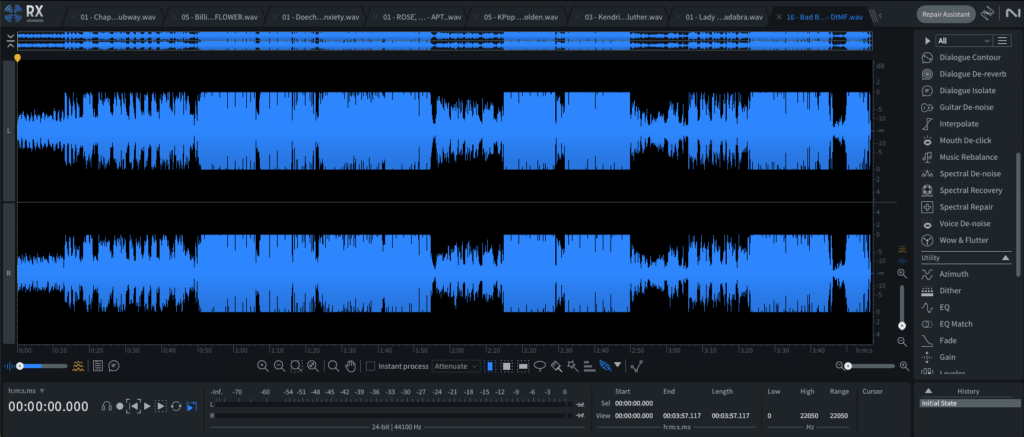
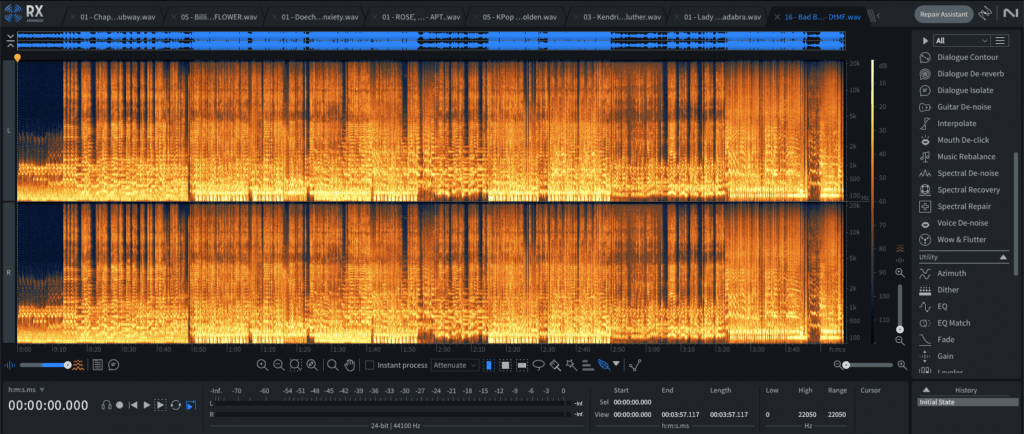
DtMF
Bad Bunny
Scotty Dittrich, Hydra Hitz, La Paciencia, JULiA LEWiS, MAG & Tyler Spry, producers; Antonio Caraballo, Josh Gudwin, Roberto Rosado & Tyler Spry, engineers/mixers; Colin Leonard, mastering engineer
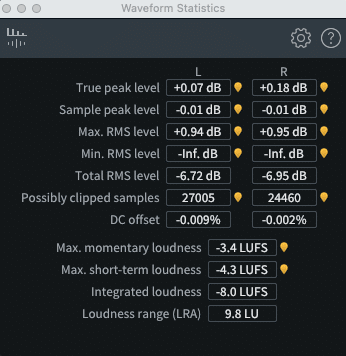
DtMF Results
| Integrated LUFS | True Peak L,R (dBTP) | Loudness Range (LRA) |
|---|---|---|
| –8.0 | +0.07, +0.18 | 9.8 |
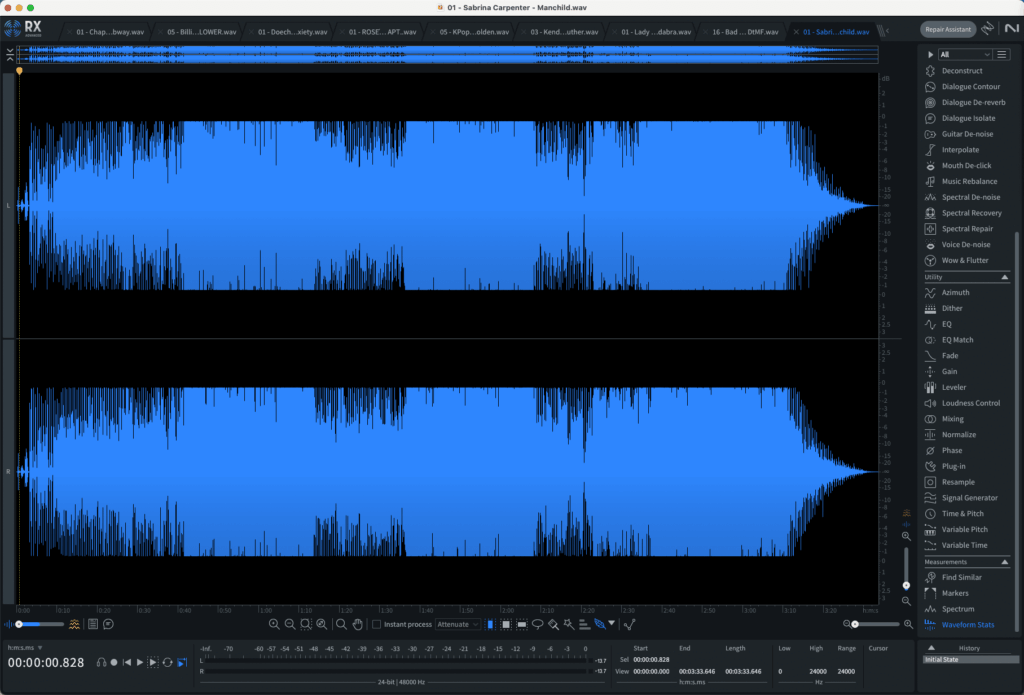
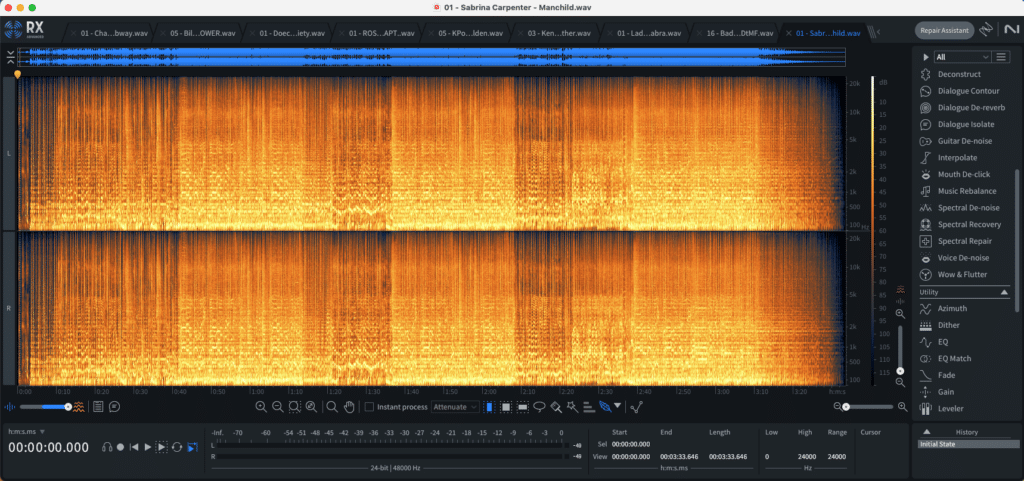
Manchild
Sabrina Carpenter
Jack Antonoff & Sabrina Carpenter, producers; Jack Antonoff, Bryce Bordone, Jozef Caldwell, Serban Ghenea, Sean Hutchinson, Oli Jacobs, Michael Riddleberger & Laura Sisk, engineers/mixers; Ruairi O’Flaherty, mastering engineer

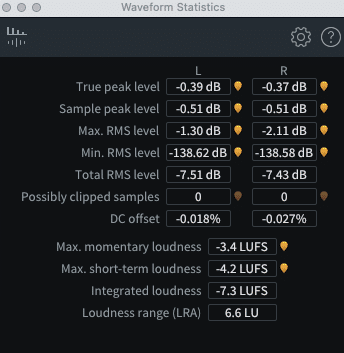
Manchild Results
| Integrated LUFS | True Peak L,R (dBTP) | Loudness Range (LRA) |
|---|---|---|
| –7.3 | –0.39, –0.37 | 6.6 |
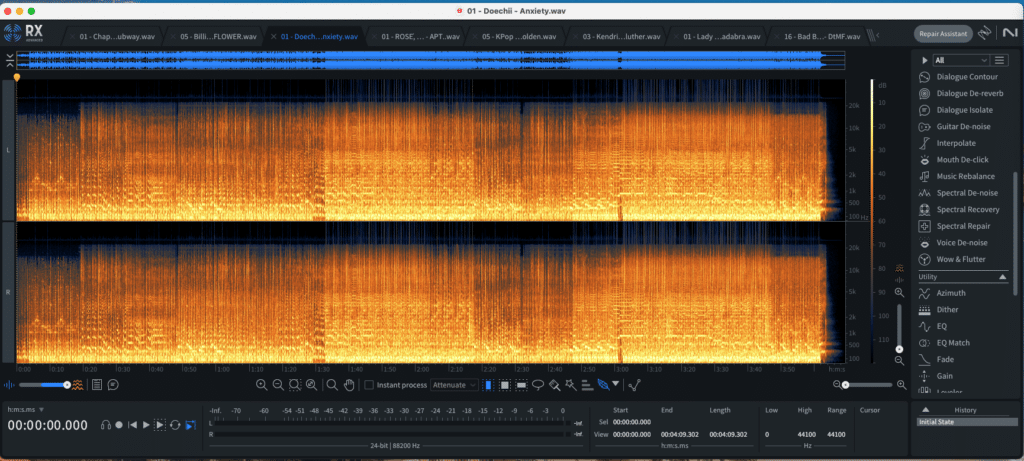
Anxiety
Doechii
Doechii, producer; Jayda Love, engineer/mixer; Nicolas De Porcel, mastering engineer

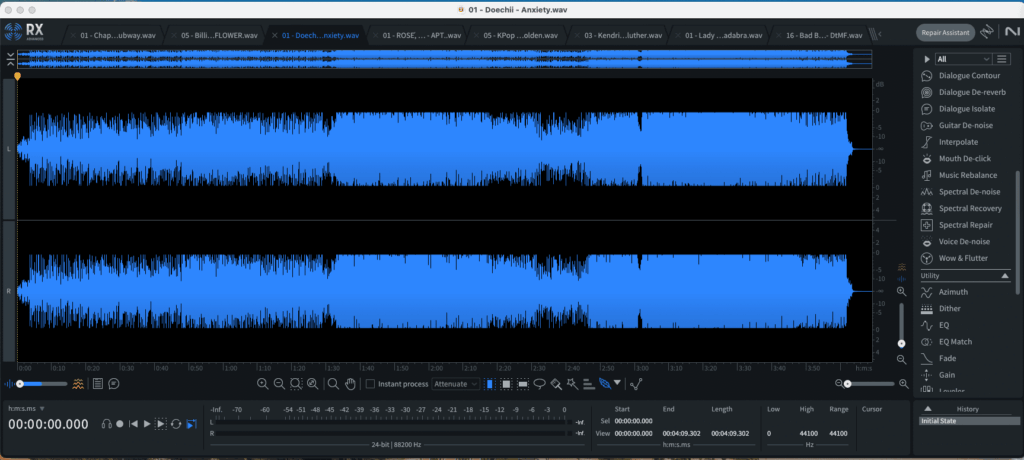
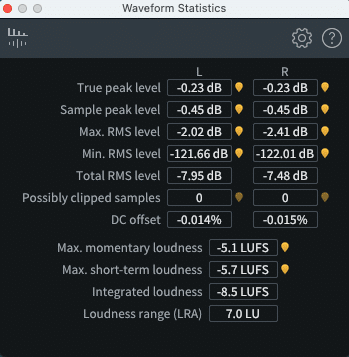
Anxiety Results
| Integrated LUFS | True Peak L,R (dBTP) | Loudness Range (LRA) |
|---|---|---|
| –8.5 | –0.23, –0.23 | 7.0 |
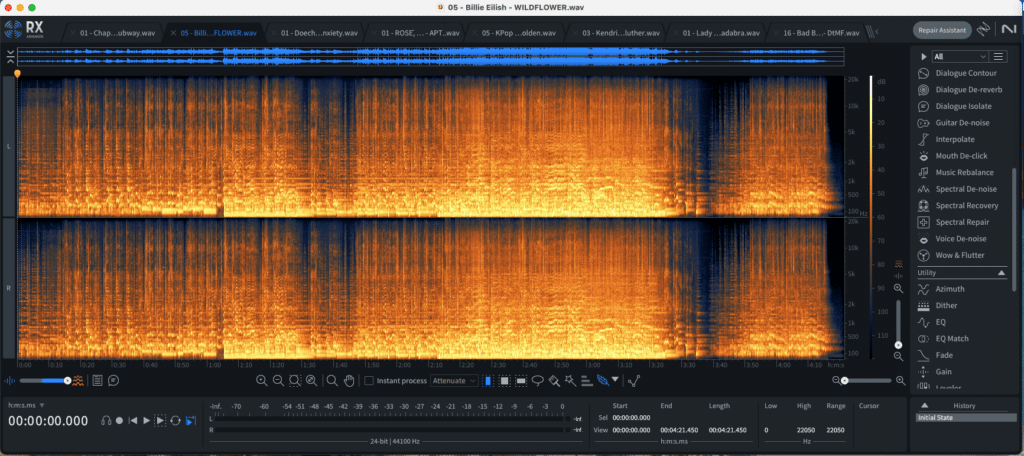
WILDFLOWER
Billie Eilish
FINNEAS, producer; Jon Castelli, FINNEAS & Aron Forbes, engineers/mixers; Dale Becker, mastering engineer
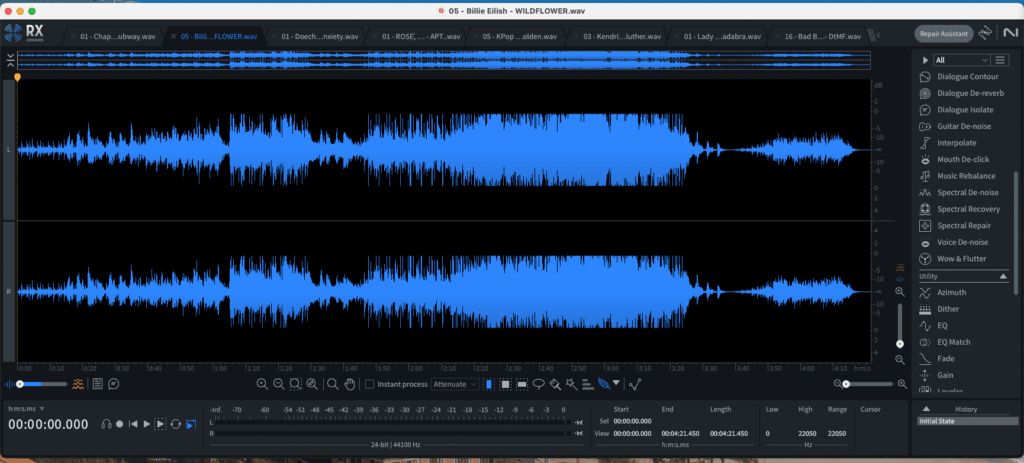
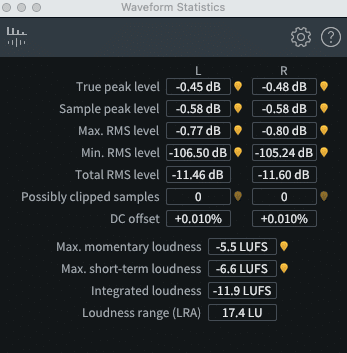
WILDFLOWER Results
| Integrated LUFS | True Peak L,R (dBTP) | Loudness Range (LRA) |
|---|---|---|
| –11.9 | –0.45, –0.48 | 17.4 |
Abracadabra
Lady Gaga
Cirkut, Lady Gaga & Andrew Watt, producers; Bryce Bordone, Serban Ghenea & Paul LaMalfa, engineers/mixers; Randy Merrill, mastering engineer

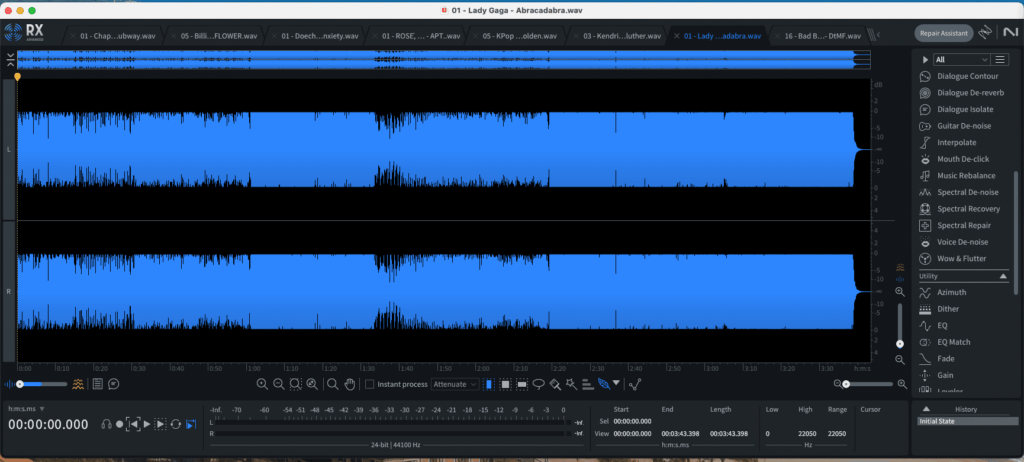
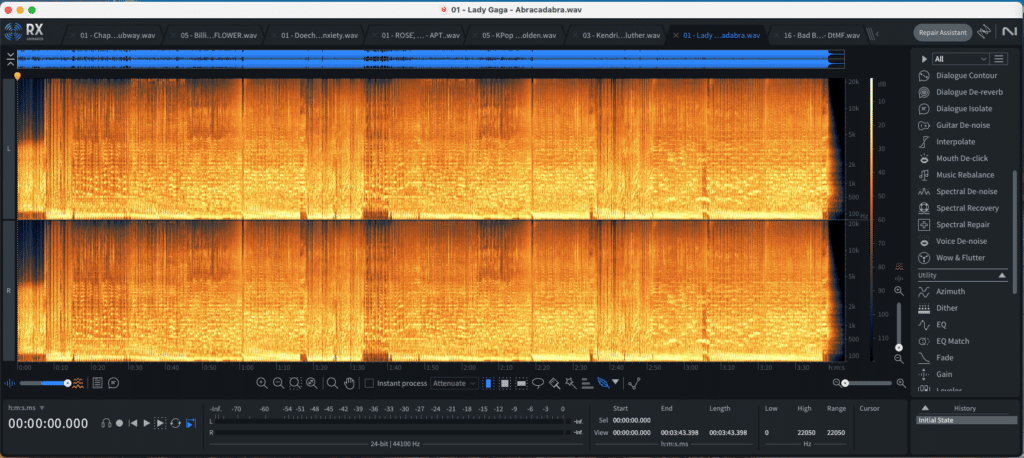
Abracadabra Results
| Integrated LUFS | True Peak L,R (dBTP) | Loudness Range (LRA) |
|---|---|---|
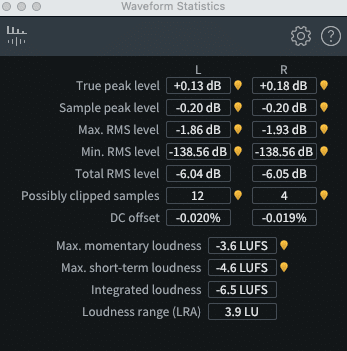
| –6.5 | +0.13, +0.18 | 3.9 |
luther
Kendrick Lamar With SZA
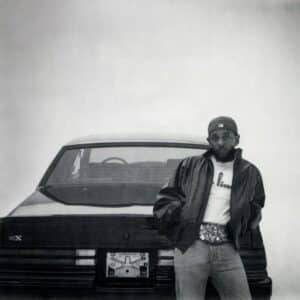
Jack Antonoff, Scott Bridgeway, M-Tech, roselilah, Sounwave & Kamasi Washington, producers; Jack Antonoff, Ray Charles Brown Jr., Hector Castro, Oli Jacobs, Jack Manning, Sean Matsukawa, Dani Perez, Tony Shepperd, Laura Sisk & Johnathan Turner, engineers/mixers; Ruairi O’Flaherty, mastering engineer
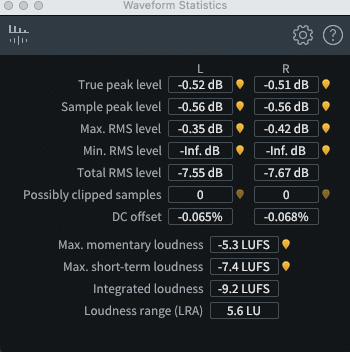
luther Results
| Integrated LUFS | True Peak L,R (dBTP) | Loudness Range (LRA) |
|---|---|---|
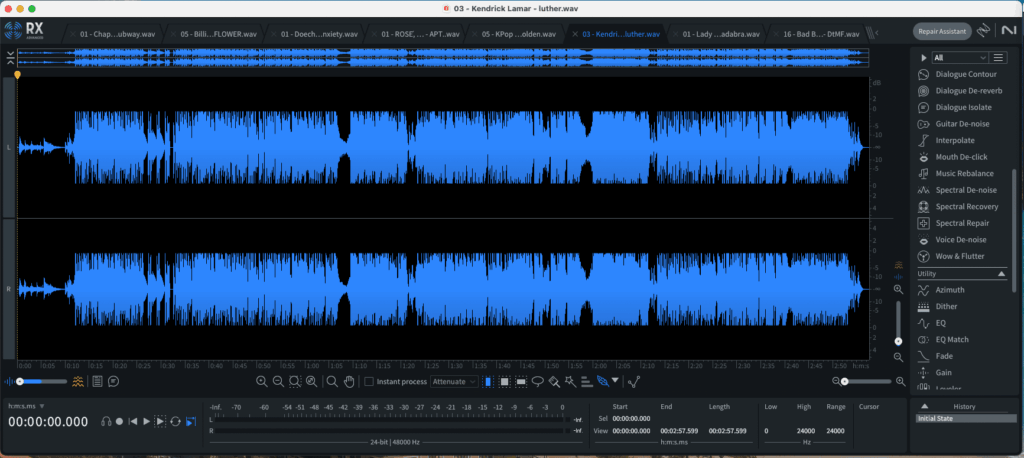
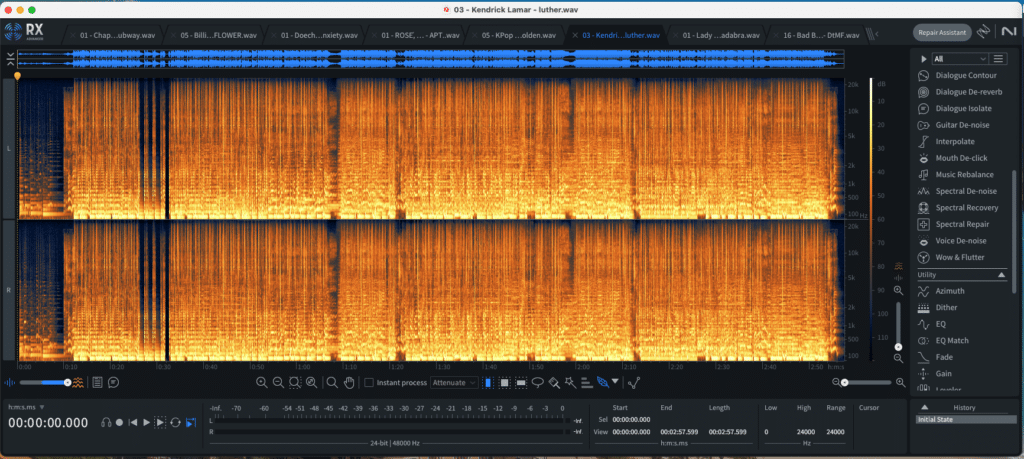
| –9.2 | –0.52, –0.51 | 5.6 |
The Subway
Chappell Roan
Daniel Nigro, producer; Chris Kasych, Mitch McCarthy & Daniel Nigro, engineers/mixers; Randy Merrill, mastering engineer

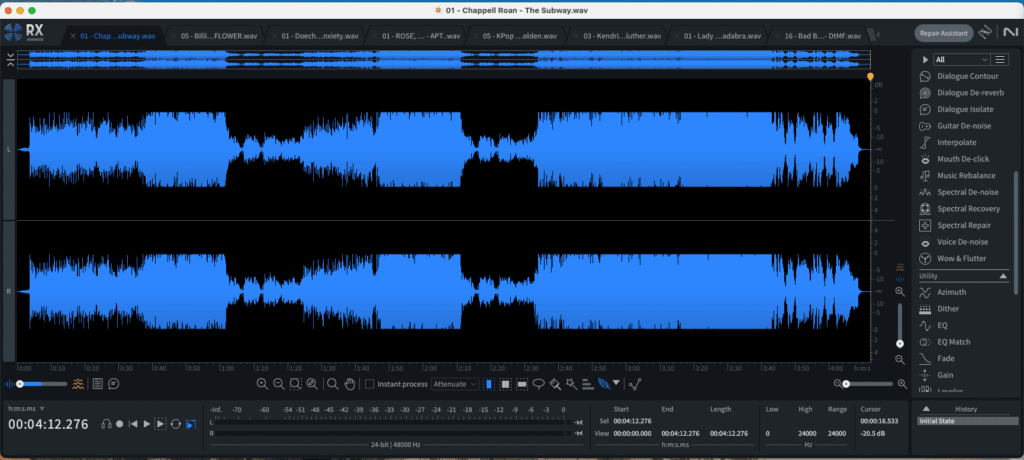
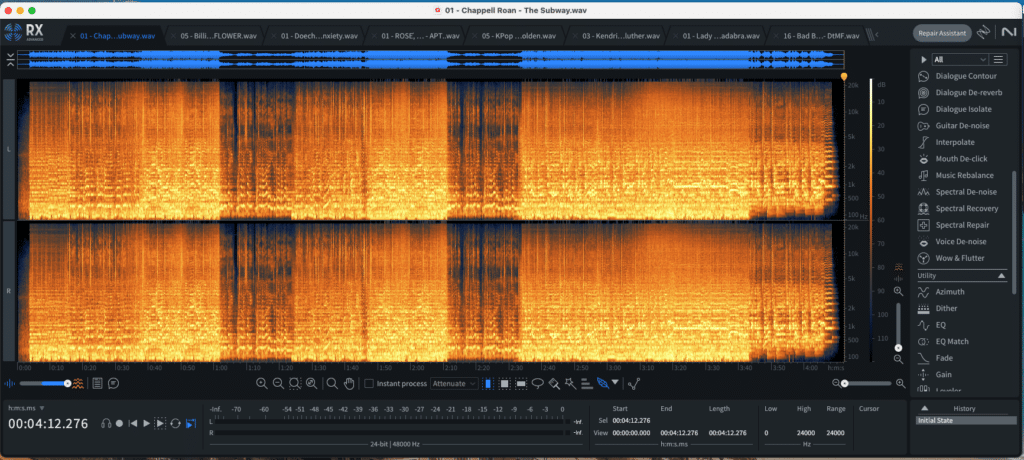
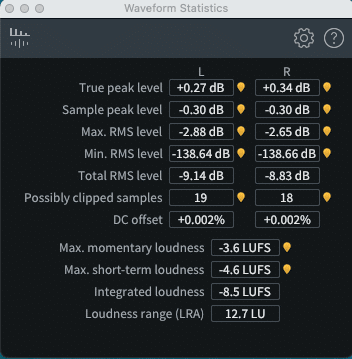
The Subway Results
| Integrated LUFS | True Peak L,R (dBTP) | Loudness Range (LRA) |
|---|---|---|
| –8.5 | +0.27, +0.34 | 12.7 |
APT.
ROSÉ, Bruno Mars
Rogét Chahayed, Cirkut, Omer Fedi & Bruno Mars, producers; Bryce Bordone, Serban Ghenea, Charles Moniz & Julian Vasquez, engineers/mixers; Chris Gehringer, mastering engineer

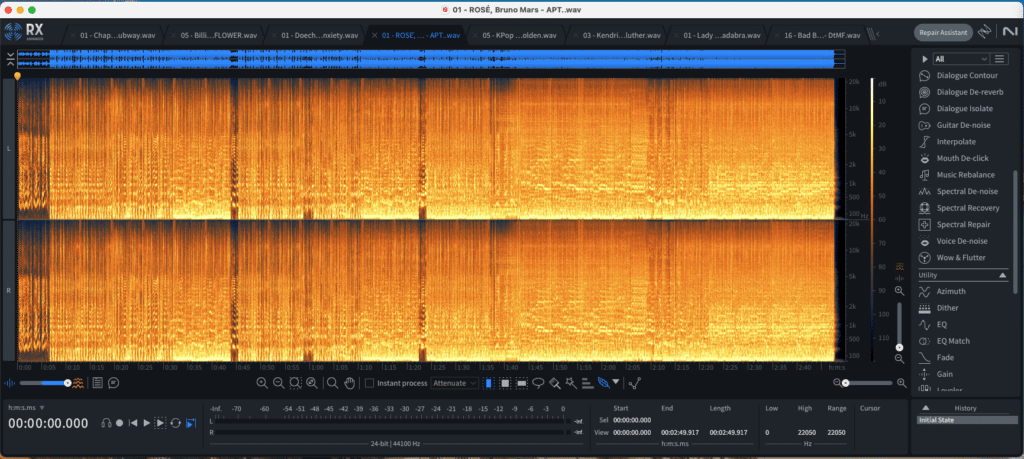
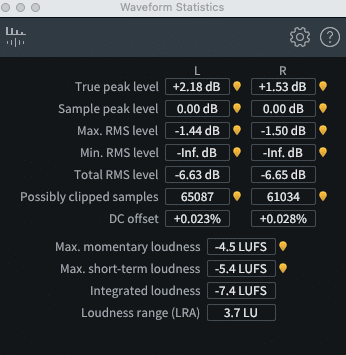
APT. Results
| Integrated LUFS | True Peak L,R (dBTP) | Loudness Range (LRA) |
|---|---|---|
| –7.4 | +2.18, +1.53 | 3.7 |

2026 GRAMMY MASTERING ANALYSIS INITIAL THOUGHTS
Check out this table that includes the LUFS, True Peak, and Loudness Range of each of the nominees.
|
Song Title |
Integrated LUFS |
True Peak L,R (dBTP) |
Loudness Range (LRA) |
|
DTFA |
–8.0 |
+0.07, +0.18 |
9.8 |
|
Manchild |
–7.3 |
–0.39, –0.37 |
6.6 |
|
Anxiety |
–8.5 |
–0.23, –0.23 |
7.0 |
|
WILDFLOWER |
–11.9 |
–0.45, –0.48 |
17.4 |
|
Abracadabra |
–6.5 |
+0.13, +0.18 |
3.9 |
|
luther |
–9.2 |
–0.52, –0.51 |
5.6 |
|
The Subway |
–8.5 |
+0.27, +0.34 |
12.7 |
|
APT. |
–7.4 |
+2.18, +1.53 |
3.7 |
Clearly mastering engineers aren’t hesitant to exceed full scale, likely turning off True Peak modes on their limiters, or using limiters without that specific function. APT., with values of +2.18 and +1.53 exceeded full scale by the most. WILDFLOWER is both the quietest and most dynamic of all the nominees. If you average all the nominees together, the table looks as follows:
|
Integrated LUFS |
True Peak L,R (dBTP) |
Loudness Range (LRA) |
|
–8.41 |
+0.13, +0.08 |
8.34 |
Music isn’t meant to be experienced via analyzing files in an iZotope RX session, it’s meant to be listened to and enjoyed, so take these results for what they are worth. Much has been made of how streaming services turn down music (as long as listeners are utilizing loudness normalization) with some even claiming that this has ‘ended the loudness war’. It’s safe to say that if the loudness war is over, that loudness has won. With almost half the nominees in 2026 going above true peak, it’s clear that engineers are still pushing for their productions to be competitively loud.
TARGET INTEGRATED LUFS BY PLATFORM
Spotify: –14 LUFS
Apple Music: –16 LUFS
YouTube / YouTube Music: –14 LUFS
Amazon Music: –13 to –14 LUFS
Tidal (and many others): –14 LUFS
I personally feel as if ‘loud’ is simply part of the aesthetic at this point. Producers, musicians, and audiences have become accustomed to the sound of records with lots of limiting, clipping, saturation, etc. and the more aggressively pushed of these records certainly wouldn’t sound the same without these tools having been applied. It’s refreshing to see a pretty dramatic range across the nominees, with WILDFLOWER having been mixed and mastered much more conservatively, but that’s what that particular song needed. Each song should be mixed and mastered based its unique on arrangement and production, not to hit some specific target loudness. I believe that this year’s results illustrate this.
Cheers to all the nominees, who are inarguably at the top of their game.
ABOUT THE AUTHOR
Ian Vargo is a Music Producer, Mix & Mastering Engineer, and Multi-Instrumentalist whose work has been heard on broadcast television, nationally televised ad campaigns, award-winning films, and viral web content amassing over 30 million views. His credits include projects for Disney | ABC, Intel, MSNBC, Airbnb, EA Games, and many more.
With over 20 years of experience in the studio, Ian has contributed to major label releases (Capitol, EMI, Fueled by Ramen, Universal, Interscope, Hollywood Records) as well as acclaimed independent projects. His passion lies in helping artists translate their creative vision into professional, release-ready recordings that stand out in today’s music landscape.
Interested in working together? Reach out at ianvargo@gmail.com if you need mixing or mastering for your next project.