In this article, I’m going to share what I consider to be the 5 most underrated UAD Plugins. After spending over a decade inside the Universal Audio ecosystem, I’ve come to appreciate just how deep their catalog of processors really is. You’ve almost certainly heard the heavy hitters — the Studer A800, the Distressor, and the Neve 1073 are top sellers for a reason — but in this article, I’m going to shine a light on the lesser-known, often under-appreciated plugins that I still find myself using regularly.
1. FATSO Jr./Sr. Tape Sim. and Compressor
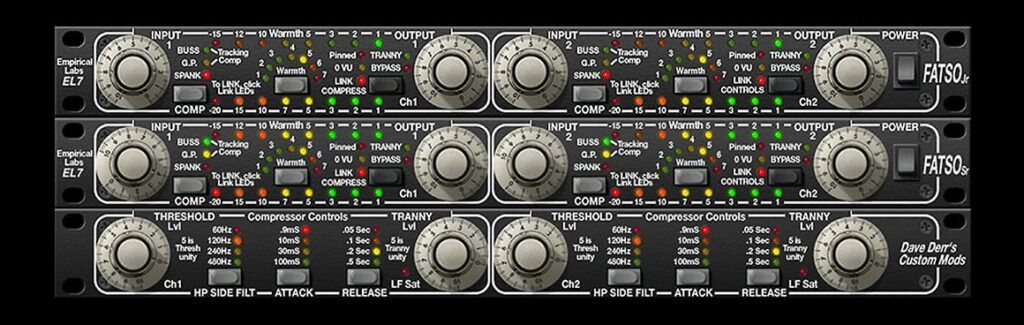
Empirical Labs’ FATSO Jr./Sr. holds a special place in the UAD lineup as the company’s first plugin collaboration with Universal Audio—arriving well before the now-ubiquitous Distressor ever made its plugin debut. And it shows. This is one of those rare “cheat code” plugins that seems to make almost anything you run through it sound immediately more rich, vibrant, and finished, often with minimal effort.
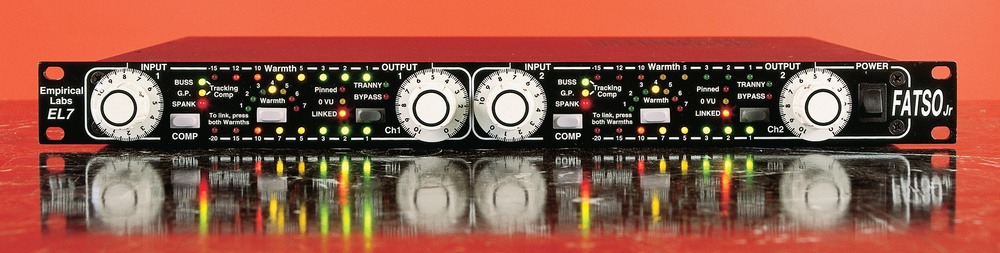
Modeled after an actual hardware unit, at its core, FATSO is all about adding vibe. It captures the harmonic density of magnetic tape, the weight of Class A transformers, and the subtle glue of tube circuitry in a way that feels musical.
The Warmth and Spank controls let you dial in anything from subtle analog polish to aggressive coloration, while plug-in-only features like Tranny saturation, sidechain filtering, and stereo/mono controls give it flexibility far beyond the hardware. From lightly coloring sources to absolutely destroying drums in the best possible way, FATSO Jr./Sr. remains one of UAD’s most under-appreciated tone-shaping tools — and a secret weapon once you know how to use it.
How I Use It:
Fatso is my personal go-to for warming up vocals. I put it early in the chain, drive the input moderately, and find myself having to use less EQ and compression thereafter. Truthfully, it works on pretty much anything from drums, bass, to subgroups, and beyond, but I use it primarily for vocals.
2. Trident A Range EQ
Amidst the constant buzz around UAD’s Neve, API, and Pultec emulations, the Trident A-Range EQ can easily get lost in the shuffle—but that’s a shame. Modeled from one of only thirteen original Trident A-Range consoles, this four-band active EQ delivers a distinctively musical flavor that defined countless classic British rock records. Unlike more commonly referenced EQs, it has a unique way of shaping sound that feels very musical and lively, making it a subtle yet powerful tool in any mix.

A Trident A-Range Desk, upon which the plugin EQ was modeled.
The A-Range is especially adept at breathing life into individual tracks. Its curves are vibrant, adding fullness to kick drums and bass without introducing harshness. Vocals gain a richness and presence that feels organic, while electric guitars can be coaxed into snarling midrange tones or shimmering high-end clarity. The interaction between its bands allows for complex sculpting that rewards experimentation, offering combinations of cut and boost that simply aren’t available on more straightforward EQs.
One of the EQ’s standout traits is its ability to impart vintage character without the mix sounding colored or artificial. In busy sessions, it can help key elements pop while maintaining cohesion, especially on instruments that often fight for space. Its tonal signature sits somewhere between subtle enhancement and transformative coloration, making it a go-to for engineers looking to add classic character with modern precision. For those willing to explore beyond the usual Neve or Pultec go-tos, the Trident A-Range EQ is a hidden gem that can elevate a mix in ways that feel both natural and thrilling.
How I Use It:
Guitars. There is something very special about the midrange of this plugin, you can boost a lot without it becoming overly harsh. Some of the great British guitar tones were crafted using these consoles, so it’s no surprise.

3. UAD OTO Biscuit 8-Bit Effects
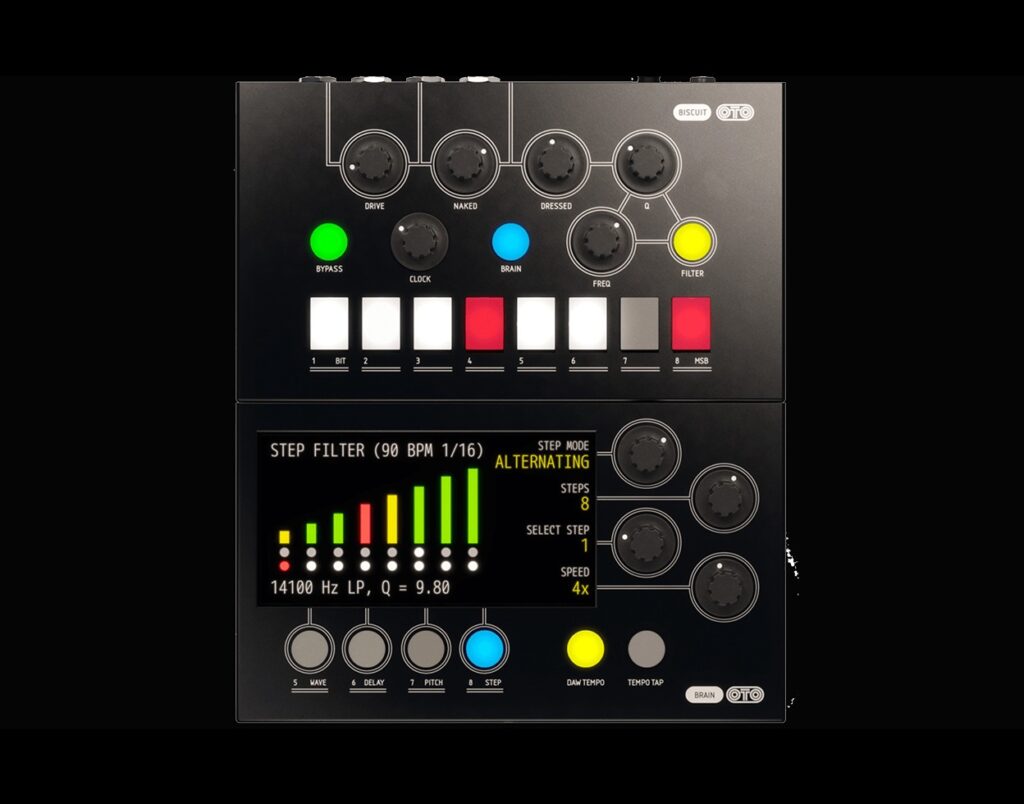
When people talk about Universal Audio, the conversation usually centers on their faithful emulations of classic preamps, EQs, compressors, and reverbs—those meticulously modeled sonic staples that have become go‑to tools for engineers chasing vintage character. It’s somewhat rare for UAD to veer far outside that world of revered classic analog gear, which makes the UAD OTO Biscuit Effects such a refreshing and slightly unexpected addition to the lineup. While still an emulation of a real piece of hardware, Biscuit lets UAD users dive headfirst into bit‑crushing and creative distortion territory—places most wouldn’t normally associate with the typical UAD aesthetic.
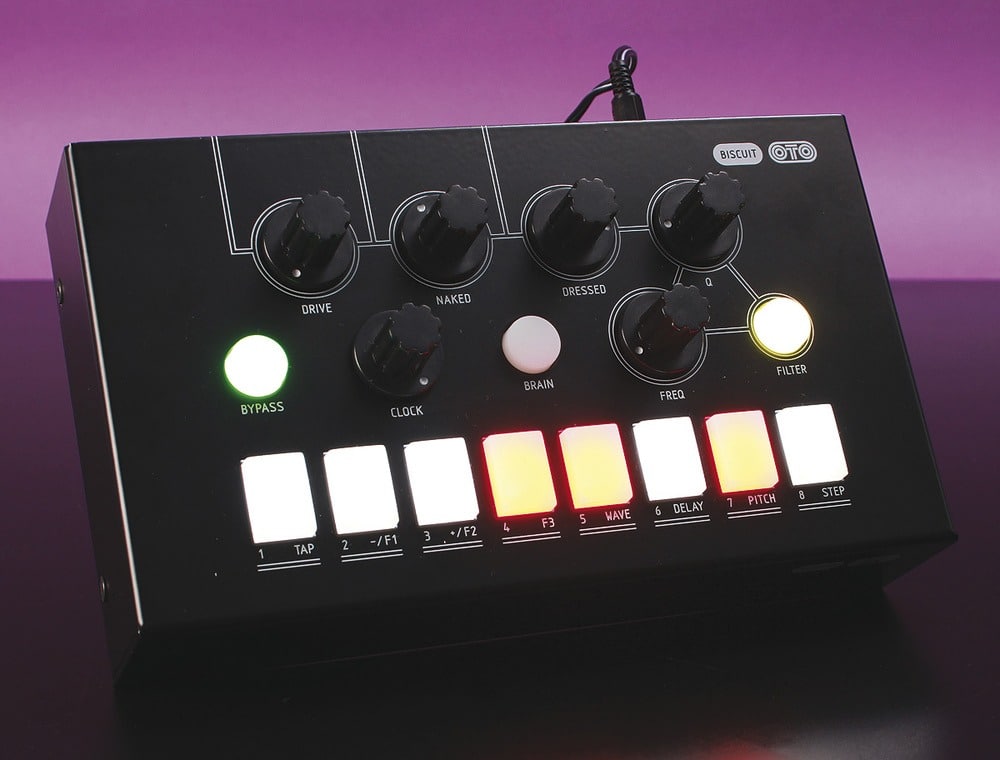
Originally a cult‑classic French multi‑effector, the Biscuit hardware was prized for its ability to manipulate sounds at the bit level, delivering that gritty, 8‑bit crunch alongside waveshaping, pitch shifting, analog filtering, and even delay. The UAD version faithfully brings all of that into your DAW, offering tools to “micromanage” bitcrush textures—from subtle lo‑fi coloration to all‑out sonic mayhem. You can invert or mute individual bits, drop the sample rate for trashy aliasing, and sculpt the results with analog‑style filters to either tame or accentuate the chaos.
What’s compelling about Biscuit in the context of the UAD library is how it expands the palette beyond classic tone shaping into genuinely experimental sound design. It’s not just about adding analog warmth or sheen; it’s about mangling sources in ways that can transform drums, synths, vocals, or any element into something unpredictable and expressive. The Biscuit is a uniquely fun and inspiring tool in a UAD user’s arsenal.
How I Use It:
For glitched-out ‘ear candy’ elements, whether it be vocals, guitars, percussion, and drums, I will place the Biscuit on an aux track, tweak the send level to taste, and experiment with the settings until I’ve created something evocative and bizarre.
4. Vertigo Sound VSM-3 Mix Satellite
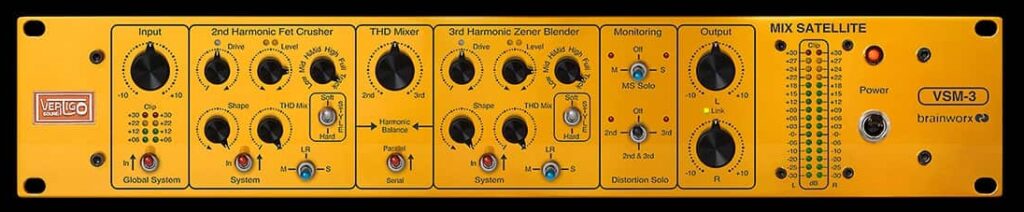
At this point, the plugin market is absolutely flooded with mix buss saturators. Tape, tubes, transformers, and other tools that add “analog glue” are easy to come by, but the Vertigo Sound VSM-3 Mix Satellite stands out because it isn’t just another “turn the knob until it feels warmer” tool. It’s a precision harmonic generator with a very specific sonic attitude and an unusual amount of control for something designed to live on the mix or master buss.
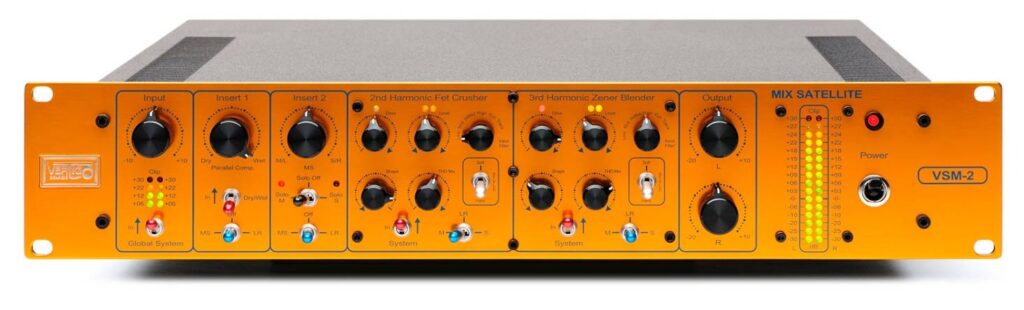
The original hardware VSM-2
The heart of VSM-3 is its dual-engine approach: the 2nd Harmonic FET Crusher and the 3rd Harmonic Zener Blender, lifted from Vertigo’s high-end hardware lineage. The Crusher excels at adding density and cohesion — that subtle, tube-like thickening that feels more structural than flashy — but it can also be pushed into bold, weighty distortion when needed. The Zener Blender, on the other hand, is all about presence and clarity, adding harmonic sparkle and forward motion that can wake up a dull mix without tipping into harshness. The ability to run these engines in parallel or series makes the plugin feel more like a harmonic toolbox than a one-trick saturator.
What really elevates VSM-3 above its peers is how targeted it can be. Frequency-selective processing, complete with a Solo function, lets you hear exactly what range you’re affecting — a huge deal when working on a full mix or master. Add in Mid/Side processing, and suddenly you’re sculpting harmonic weight into the center while lifting air and dimension into the sides, all without smearing transients or collapsing depth. In a crowded field of mix buss saturators, VSM-3 doesn’t just add “vibe” — it lets you design it, deliberately and musically.
How I Use It:
While this thing was definitely built with mix buss and mastering in mind, it can be a lot of fun to dial in a sort of ‘megaphone’ vocal sound by turning the drive way up, and placing a short reverb or delay after.
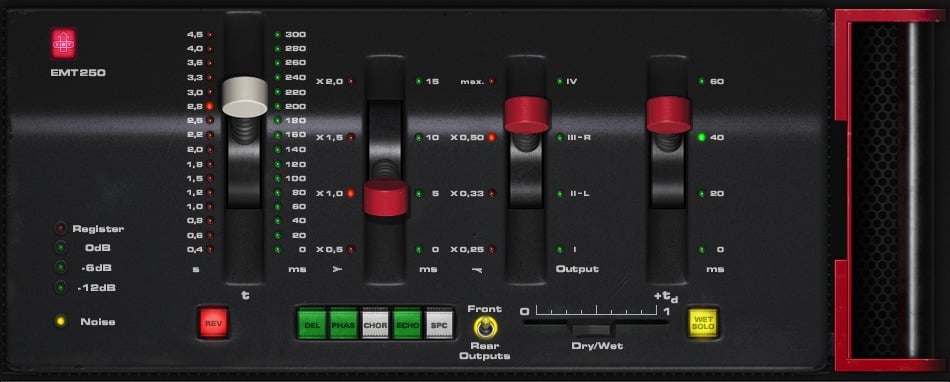
5. EMT 250 Classic Electronic Reverb
I am guilty of more often reaching for UAD’s heavy hitters — the EMT 140 plate, AMS RMX16, and Capitol Chambers, more often than this one, but the EMT 250 is still a glorious-sounding reverb. Spend real time with the 250 and it quickly becomes clear why the original hardware is considered one of the most sought-after reverbs ever made. This isn’t just another vintage space generator — it’s a set of musical, character-rich algorithms that still feel relevant decades later.
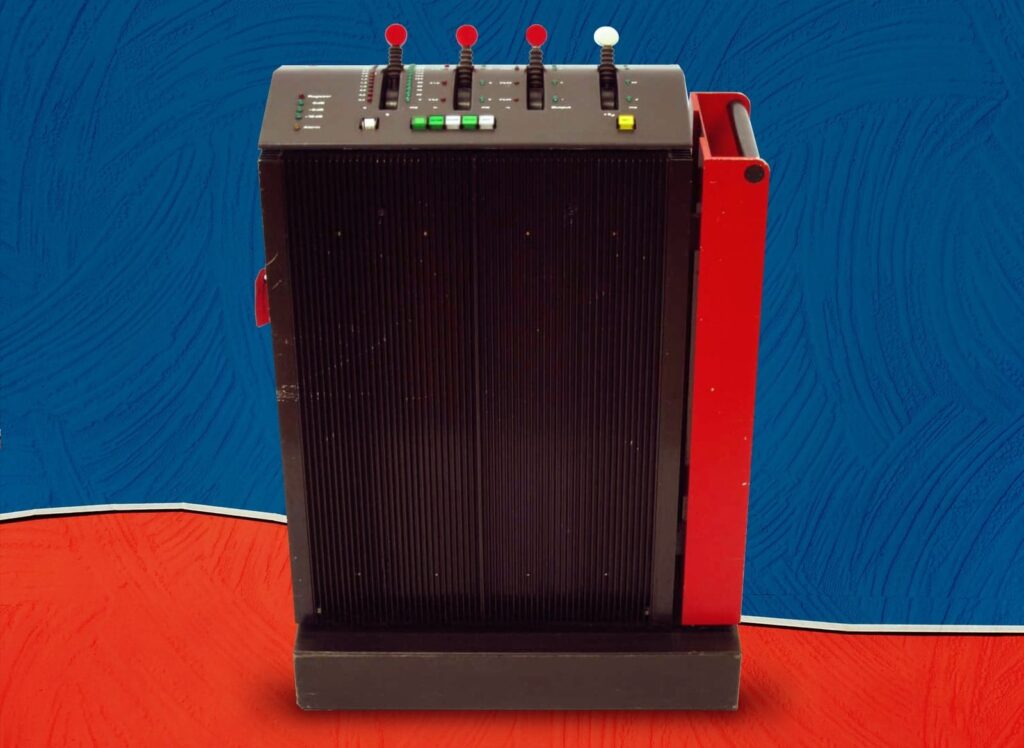
An original hardware 250, which kind of looks like the console of a spaceship.
The 250 doesn’t just add space, it adds tone. There’s a subtle modulation that makes it incredibly flattering on legato elements like strings, adding depth without washing away articulation. It has a way of wrapping around a source rather than sitting behind it, which is why it also excels in more experimental applications — pushed chorusing, evolving echoes, and slightly uncanny ambiences that feel organic instead of gimmicky.
As the only EMT-endorsed emulation of the original 250, this plugin stays faithful to the hardware’s iconic algorithms while adding modern conveniences like Dry/Wet mix control, Wet Solo, and Hard Bypass. It may not be the flashiest reverb in the folder, but it absolutely stands the test of time.
How I Use It:
For cavernous reverbs, primarily on vocals and ambient electric guitar, it’s hard to beat the 250.
Underrated UAD Plugins Summary
UAD’s top selling plugins have earned their reputation. As someone who’s been using Universal Audio plugins for well over a decade, there are a handful that end up in almost every mix I touch. Studer A800 is practically a fixture on my vocals and drums, the Distressor plays a huge role in defining the punch and attitude of my kicks and snares, and Inflator remains one of my favorite ways to put a final polish on a mix buss. These obvious classics, usually available through UAD Spark — are the ones everyone talks about for good reason.
But every so often, I’m reminded that some of my most relied-upon tools include some of the older, lesser known plugins that don’t get nearly as much spotlight. They’re not always front and center in marketing pushes, but they’ve quietly stood the test of time by delivering character, depth, and musical results. If you’re deep in the UAD ecosystem, don’t sleep on the five plugins mentioned above — they’re enduring for a reason, and they continue to earn their place in modern productions.
ABOUT THE AUTHOR
Ian Vargo is a Music Producer, Mix & Mastering Engineer, and Multi-Instrumentalist whose work has been heard on broadcast television, nationally televised ad campaigns, award-winning films, and viral web content amassing over 30 million views. His credits include projects for Disney | ABC, Intel, MSNBC, Airbnb, EA Games, and many more.
With over 20 years of experience in the studio, Ian has contributed to major label releases (Capitol, EMI, Fueled by Ramen, Universal, Interscope, Hollywood Records) as well as acclaimed independent projects. His passion lies in helping artists translate their creative vision into professional, release-ready recordings that stand out in today’s music landscape.
Interested in working together? Reach out at ianvargo@gmail.com if you need mixing or mastering for your next project.