Recently, I wrote an article called, 24-Bit vs. 32-Bit Float Recording: Which to Use and When? I received a comment regarding the switching modulation noise that can occur in 32-bit recording, so I decided to reach out to two developers and write a follow-up article.
HOW 32-BIT FLOAT RECORDING WORKS
Depending on the manufacturer, there are at least two analog-to-digital converters used in the process. Below are responses from Zoom and Sound Devices.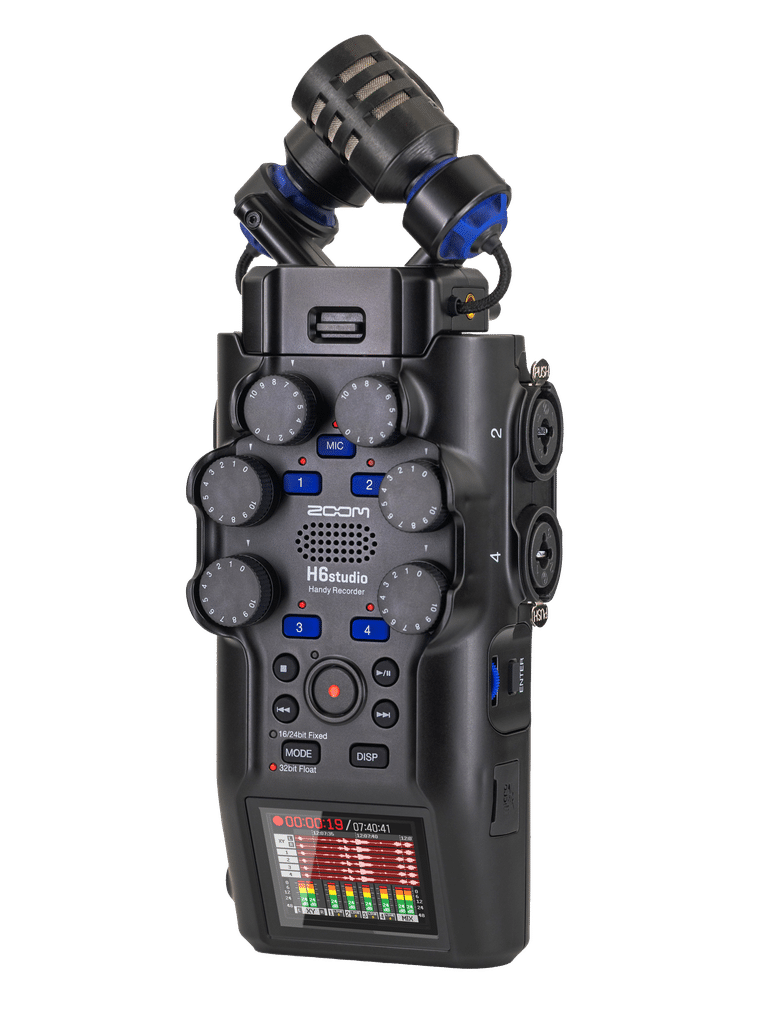
Zoom H6studio (above)
From Jason S. (Product Support Specialist—Zoom North America)
On our dual A/D designs, the architecture uses two A/D converters with different input gains, and the recorder continuously monitors both conversion paths and automatically selects the one that provides the best recording results. Within our 32-bit float capable lineup, models that explicitly call out dual A/D converters include the H6studio, H5studio, F3, F6, H1 XLR, and the F2/F2-BT family.
In practice, the selection process is handled internally to avoid audible artifacts. While the topic of “switching noise” is often discussed in theory with dual-converter approaches, the intent of our implementation is to maintain a clean result through the crossover region rather than create a noticeable “toggle” effect.
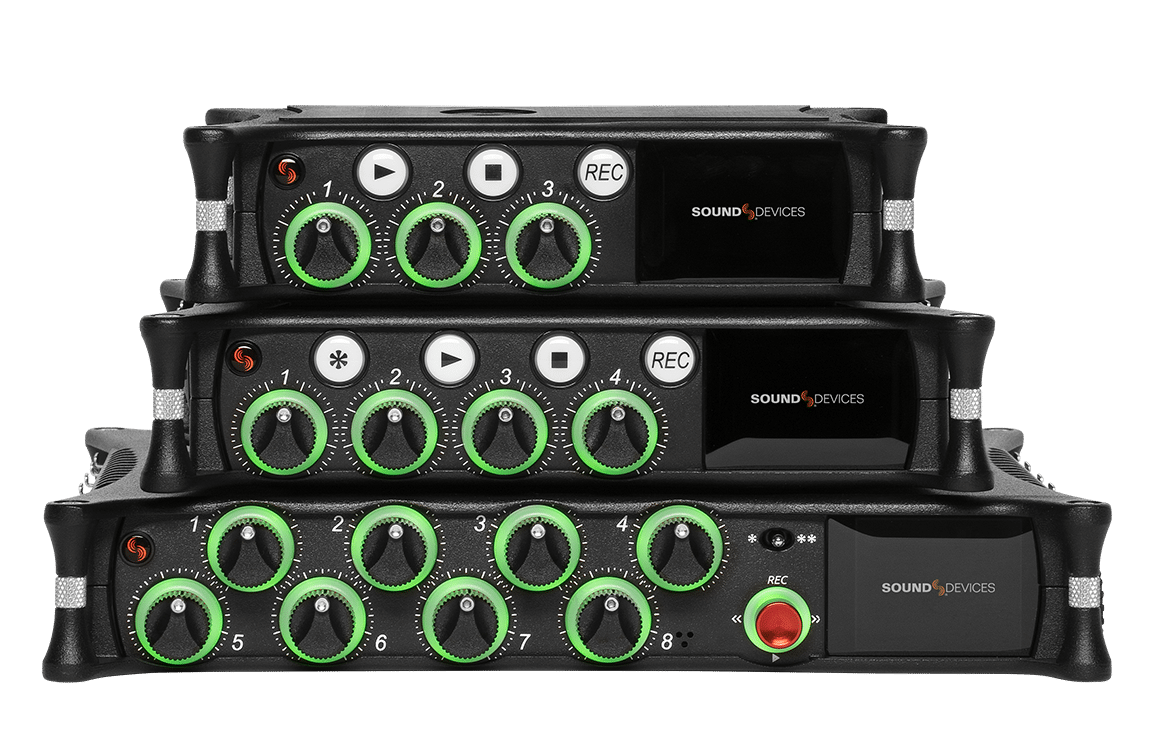
Sound Devices MixPre II Series (above)
From Paul Isaacs (Director of Product Management and Design—Sound Devices)
Our MixPre II Series, 8-Series and Astral transmitters use multi-stage converters. Multi-stage refers to more than two A/D converters. When a design uses more than one A/D converter, it introduces some pretty big challenges, including switching modulation noise. We spent a lot of time and engineering effort figuring out how to mitigate this issue —something that’s tripped up other manufacturers in the industry. The details are part of what makes our approach unique, so I hope you’ll understand why we can’t share everything. That said, we do have a patent that covers some of the key aspects of our multi-stage implementation.
Below is a link to the Sound Devices patent, developed by inventors Steven Popovich and Matt Anderson, that includes block diagrams and a detailed description:
Sound Devices Patent
LIMITATIONS OF THE SIGNAL PATH
As Jason from Zoom pointed out, the signal can only be as good as the weakest link.
One important clarification: 32-bit float recording prevents digital clipping in the recorded file, but it cannot reverse distortion that happens in the analog stage before conversion (for example, overload at the input or mic capsule). The H6 studio will indicate if clipping occurs in hardware, and switching the Mic/Line setting to Line (when appropriate for the source) can help prevent hardware clipping.
CONCLUSIONS
The challenges of 32-Bit Float recording have been recognized and addressed in various ways by manufacturers. When proper gain staging is possible, modulation noise is not an issue since 24-bit recording does just fine with a single AD converter. In addition to the problem of possible modulation noise when switching in multiple converter circuits, the limitations of the hardware (mic capsule, pre-amp, etc.) also play a crucial role in the recording process because, as we all know, polishing a turd is pointless. It will still stink, but with a wider dynamic range. Still, 32-Bit float recording seems to be an obvious choice when the recording context is unpredictable.
Special thanks to Jason S. (Zoom) and Paul Isaacs (Sound Devices) for their time and insight.
EXTRAS
Want to win a free license to Kontakt 8? Be one of the first 1000 people to FOLLOW WAVEINFORMER ON INSTAGRAM to be automatically entered to win one of three full-version Kontakt 8 licenses! Read more.
Assess your knowledge of essential audio concepts using our growing catalog of online Quizzes.
Explore more content available to Subscribers, Academic, and Pro Members on the Member Resources page.
Not a Member yet? Check the Member Benefits page for details. There are FREE, paid, and educational options