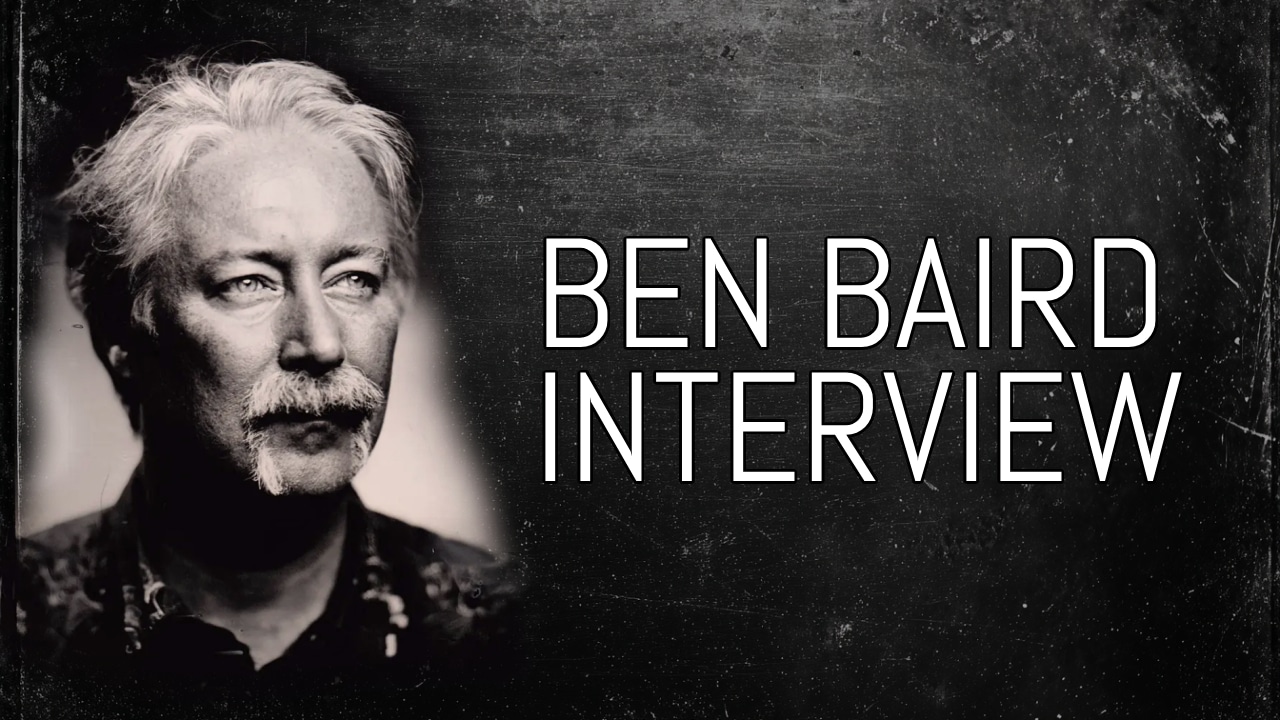
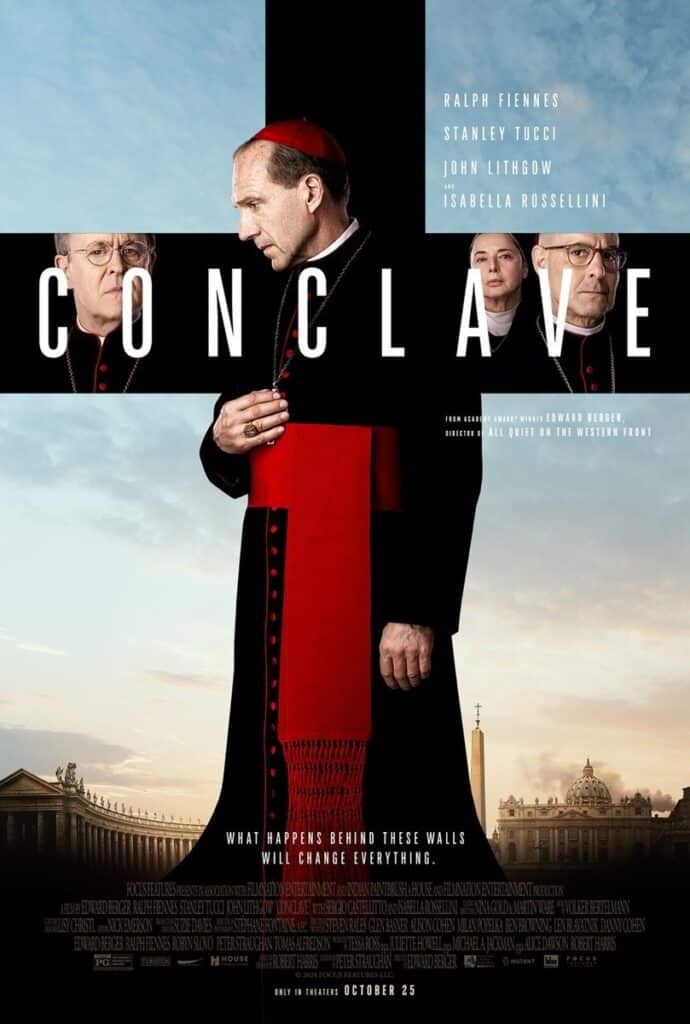
I was so fortunate to have recently had a conversation with Sound Designer and Sound Supervisor Ben Baird, who has had an extensive career working in film, TV and even games. Ben recently worked on Conclave, a gripping political thriller set against the backdrop of a papal election, directed by Edward Berger (All Quiet on the Western Front). The film stars Ralph Fiennes, Stanley Tucci, and John Lithgow, and Ben shared insights into how sound design helped build the film’s atmosphere of tension, secrecy, and suspense. For more conversations with industry professionals, check out our interviews section.
Ian Vargo (IV) Thanks for being here, Ben. Can you discuss how you became interested in sound?
Ben Baird (BB) When I was about seven, I used to record radio plays and make my four-year-old brother perform them for our parents. We’d record these two-hour-long radio plays, and they were unbelievably appalling. My poor parents—Sunday afternoons completely ruined by two hours of rubbish from a four-year-old.
That’s when I started to realize that recording these kinds of shows was probably what I was really into.
IV: May I ask what you were recording on?
BB: Yeah, my dad bought a Philips cassette deck. It was a horizontal one—not the kind where you load it from the front. It had a proper mechanical eject button that lifted the whole tray out, and you’d place the cassette in there. We used C120 cassettes. Everything was recorded live. I’d be instructing my brother as we went along, giving him the script and directing him in real time. The whole thing went straight onto tape.
I mean, they were terrible. Fortunately, none of them have survived. But it was probably a great learning experience.
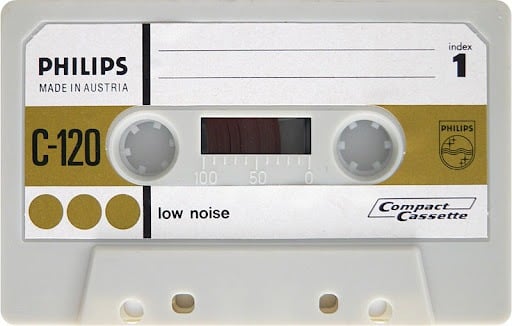
An old PHILIPS C-120 Cassette
IV: I remember my first recording device was a cassette as well. My parents got me a Yamaha MT400 4-track.
BB: Yeah. And having to get it right at the source is something that I believe isn’t as appreciated now as it was back then. There were so many variables that could lead to a faulty recording.
As we’ll discuss more, the right sound recorded the right way is often exactly what you’re looking for—not having millions of options. Just one sound that’s perfect for the moment. That’s really been our approach: to distill everything we think about film soundtracks into finding the one pure, right sound for the moment—and making that work.
IV: Can you tell us about your early career in studios?
BB: One of the engineers at the studio I was working at left, and I asked my boss if I could have a go. I’d been practicing a bit, and he said, “Okay, give it a go.” I seemed to do okay, and before long, I was working on documentaries and exhibition shows. I found it really exciting.
My brother—he’s a drummer and works in the music industry—came by the studio once and looked at what I was doing. He couldn’t understand why I was mixing music, sound effects, voices… all of it together. But I was hooked.
IV: How did you first get involved with FIFA and game audio?
BB: That happened a few years later. I was doing fine in the studio, and one night around midnight, the phone rang. I picked it up, and it was this guy from Canada asking, “Do you do sound for computer games?”
I said yes—but honestly, at the time, I barely knew what he meant. This was 1995. I’d played Space Invaders and a few others, but I wasn’t really into games. It turned out they were looking for a recording studio in London for the very first FIFA game.
The caller had already phoned nearly every studio in London, but because I happened to be there late and answered the phone, we landed the job. That random midnight call led to me working on FIFA for the next 26 years.

IV: What kind of work were you doing on the early versions of FIFA?
BB: We started with just the commentary—FIFA 96 had commentary and a few basic 8-bit sound effects. But because of the hardware limitations at the time, especially on the original PlayStation, we had to figure out how to fit everything onto a CD-ROM. That meant figuring out compression and audio delivery systems, working with companies like Waves and Digidesign to get more sound data onto the disc alongside the video content. By around 2003 or 2004, we started recording all the international language versions, and eventually we got much more involved in the sound design—recording crowd chants, football kicks, and other on-pitch elements.
IV: So while you were doing all this work on FIFA, were you also aiming to move into film?
BB: Yes, absolutely. Around that time, I really wanted to get into feature films. But FIFA was such a huge and unexpected opportunity—it was incredibly distracting in the best way. Eventually, I left the company I had been working at. We still collaborated for a bit, even after it shut down, and we continued working on FIFA for a while.
But the main reason I left was because I had a chance to finally do a feature film. A friend of mine had landed his first feature, and I wanted to work on it—but it just wasn’t compatible with the kind of short-term work we were doing. A documentary might be three days, a museum installation a few hours, a commercial maybe a couple of hours. Suddenly working on something that required a three-month commitment was a big shift.
Thankfully, I had a good relationship with my old boss. He was understanding and supportive. So I moved on and co-founded Aquarium Studios with the goal of doing film work.
IV: How did things go once Aquarium Studios was up and running?
BB: Surprisingly well—at least at first! Right out of the gate, we landed a film with Kathleen Turner and David Warner. It was a Channel 4 project called Cinderella. Big names, a great team. We thought, “Wow, that was easy!” We had just started this new company and immediately got a feature film.
Prime Suspect was a big one. That was a show I remembered from my childhood, and when it got rebooted, it was an amazing experience to work on it—especially with Helen Mirren.
We also did a lot of TV drama around that time, and one of the standout projects was Merlin for the BBC. That show was absolutely fantastic to work on. A real highlight.
IV: May I ask how many employees you currently have at the studio?
BB: We have six full-time employees. At the moment, for example, we’ve also got about seven or eight freelancers working on various projects.
We’ve structured the team in a bit of a pyramid. I’m the sound designer and mixer. Jack is in charge of dialogue. Archie heads up sound effects and supervises. Then we bring in freelancers to help with the editing, and each of those areas is supervised. The idea is to have a system that can scale, especially now that schedules shift so drastically and projects can suddenly overlap.
So if two projects crash into each other, we’re not stuck working 24 hours a day—we’ve built a system that can actually handle that. And I think we’ve finally cracked it with this pyramid structure.
Also, we have quite a few freelancers who help across all departments. And actually, about half the company is based in Belgium, so we have operations over there too. That way, when things ramp up, we can expand—and then scale back down to just the core six of us when things are quieter.
IV: I understand you were able to go to the Vatican when researching sound for Conclave. Can you talk about that?
BB: That’s one of the things that really made working on the film stand out — they had the budget to send me to Rome for the weekend.
It was such an interesting experience. You casually say, “Oh, the Pope is giving an address on Sunday — let’s go check it out.” But when you actually walk into St. Peter’s Square and see the crowds gathering, there’s this incredible energy. It’s hard to describe. It’s kind of like attending a major sporting event in terms of the intensity, but without the noise. It’s not people shouting or cheering — it’s more subdued, but somehow even more powerful. You can actually feel the electricity in the air.
I was quite taken aback. I’m not the most religious person, but in that moment, you really feel the collective power of all those people coming together with purpose and anticipation. That was fascinating — to experience that kind of atmosphere firsthand.
And that atmosphere definitely made its way into Conclave. All throughout the film, often very deep in the background, there’s this subtle presence — a kind of distant crowd noise that evokes the people gathered in St. Peter’s Square, waiting for something to happen. It’s only prominent in a couple of scenes, but it’s there throughout, adding a constant undercurrent of tension and anticipation.
IV: What were some ways you made the sound so authentic?
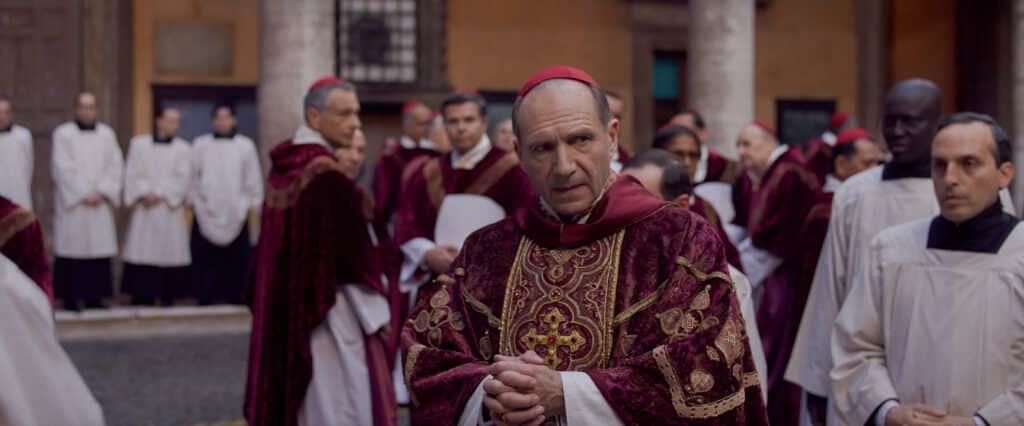
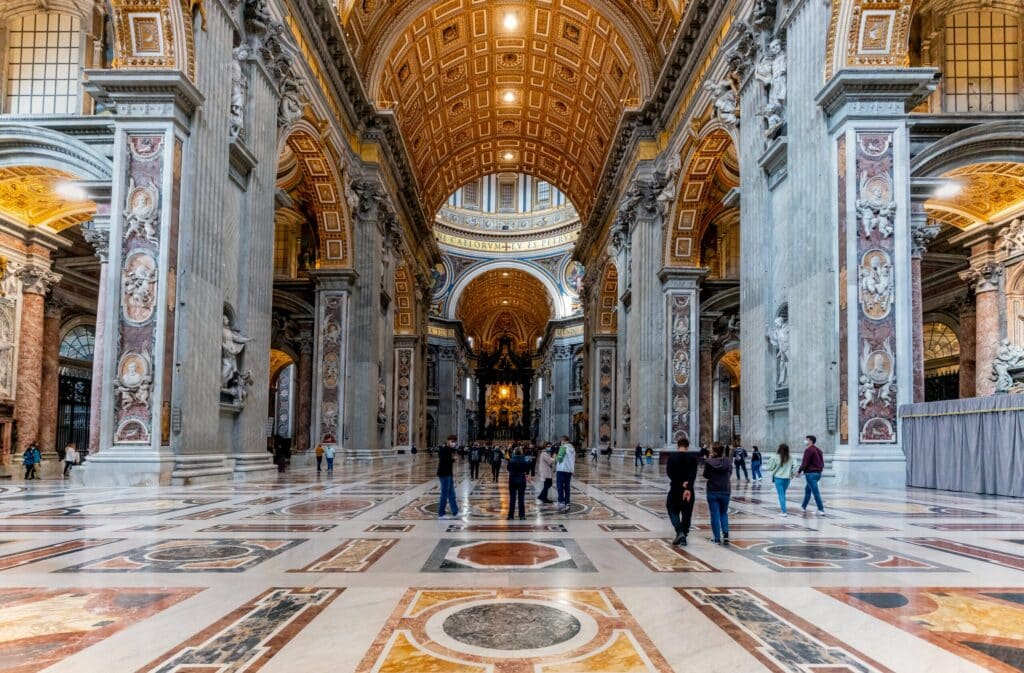
BB: When we went into St. Peter’s, one of the first things I noticed was the sound of all the shiny marble floors — and everyone wearing sneakers. All you could hear was the squeak of shoes. That led us to an amusing idea: what if John Lithgow’s character was wearing sneakers, too? So, every time he walked anywhere, he squeaked across the scene. It added this subtle layer of irreverence to his character, which felt right.
There was a particular moment where director Edward Berger wanted to emphasize Lithgow’s entrance. He asked for something that would give it a bit more presence. So we had Lithgow’s character squeak to a halt just off-screen before he enters — and it worked beautifully. You’re sitting there, then suddenly, you hear this squeak and know he’s arrived.
Later, when his character is shamed and walks away, the squeaks remain — a bit of comic relief, but also an emotional beat. It’s a small detail, but one we really loved. It’s the kind of thing I enjoy most: those little textures you pick up just by being present and listening closely.
We also captured the constant bell sounds in and around St. Peter’s and across Rome — all sorts of different tones and timings. That variety gave us a rich soundscape to draw from. Great sound often goes unnoticed, but every once in a while, a moment like a sneaker squeak can carry the narrative just for a beat — and those are the moments we live for.
IV: Can you discuss some techniques you used to make the sound for Conclave so intimate and compelling?
BB: I’ve always been drawn to moments of silence in storytelling, and Conclave offered a perfect opportunity to explore that. There’s a pivotal scene about halfway through the film where the protagonist breaks into the Pope’s bedroom and breaks the seal. He’s searching through the Pope’s belongings, looking for evidence of something — we’re in a very private, high-stakes moment.
While he’s in there, Sister Agnes — played by Isabella Rossellini — approaches from the corridor. The two characters sense each other on opposite sides of the door, but they never actually interact. She knows he’s inside, and he knows she’s just outside. That was a fascinating sound design challenge: how do you portray the sensation of two people connecting through presence alone, without dialogue or contact?
Our solution was to strip the sound back completely. As soon as he enters the room and closes the door, we cut to absolute silence — just his breathing and the subtle sounds of his movement. When the door shuts, it creates this eerie stillness that’s almost jarring — like a moment where you wonder if the cinema’s audio has dropped out. That’s how stark it is.
We focused intensely on the detail — the Foley is very delicate. You hear a book open with a slow creak, the quiet rustle of paper, every nuance of his physical presence in the room. We’re very proud of how precise and intimate it feels.
Then, from far down the corridor, you hear a lift open — it’s that quiet. As she approaches the room, we shift perspective. Outside, you can hear the faint hum of the overhead lights. There’s this contrast: he’s in a sacred, silent, claustrophobic space, and she’s in the more public, slightly noisier corridor.
As she reaches the door, her breathing becomes audible and begins to synchronize with his. That simple detail — two breaths in time — creates a sense of connection. Then she walks away, and the moment passes. It’s subtle, but we hoped to capture that fleeting, almost spiritual link between the characters.
And to me, it’s one of the most successful uses of silence we’ve achieved.
IV: The breathing is very prominent in this film. Was that a conscious decision?
BB: Breathing has become an increasingly important storytelling tool in my work. It started with Lady Macbeth, where we used the lead character’s breath as a point of connection. In The Wonder, with Florence Pugh, we developed that even more — the breathing became a throughline of emotional continuity. Then in The Last Breath, it took on even more significance.
By the time we got to Conclave, we really leaned into it. With Lawrence’s character, we wanted the audience to feel like they were right on his shoulders — hearing his breath, experiencing his tension. Edward Berger, the director, really embraced this. In fact, there were times I thought, “This is quite loud for breath,” but he’d ask for it to go even louder, even more present.
And it works. When people talk to me about it, they often mention how physically stressed they felt — and that’s exactly the point. The breathing places you in his experience. You’re not just observing his anxiety; you’re sharing in it.
There’s a symbolic weight to it too — the idea that the weight of the world is on his shoulders, and we, the audience, are sitting there with him. We’re complicit. We’re part of the tension.
I remember watching Lady Macbeth in the cinema, and I noticed something interesting: at certain quiet, intense moments — often when the breathing took over — the audience actually stopped eating their popcorn. That’s when you know sound is doing something powerful. Not distracting, but commanding.
IV: Any advice for aspiring sound designers that are about to start their career?
BB: Reach out to as many studios as you can. You may reach out to 300 and only hear back from 1, but that 1 is all you need to get your start.
About the Author
Ian Vargo is a Music Producer, Mix & Mastering Engineer, and Multi-Instrumentalist whose work has been heard on broadcast television, nationally televised ad campaigns, award-winning films, and viral web content amassing over 30 million views. His credits include projects for Disney | ABC, Intel, MSNBC, Airbnb, EA Games, and many more.
With over 20 years of experience in the studio, Ian has contributed to major label releases (Capitol, EMI, Fueled by Ramen, Universal, Interscope, Hollywood Records) as well as acclaimed independent projects. His passion lies in helping artists translate their creative vision into professional, release-ready recordings that stand out in today’s music landscape.
Interested in working together? Reach out at ianvargo@gmail.com if you need mixing or mastering for your next project.