EVENTIDE RIPTIDE OVERVIEW
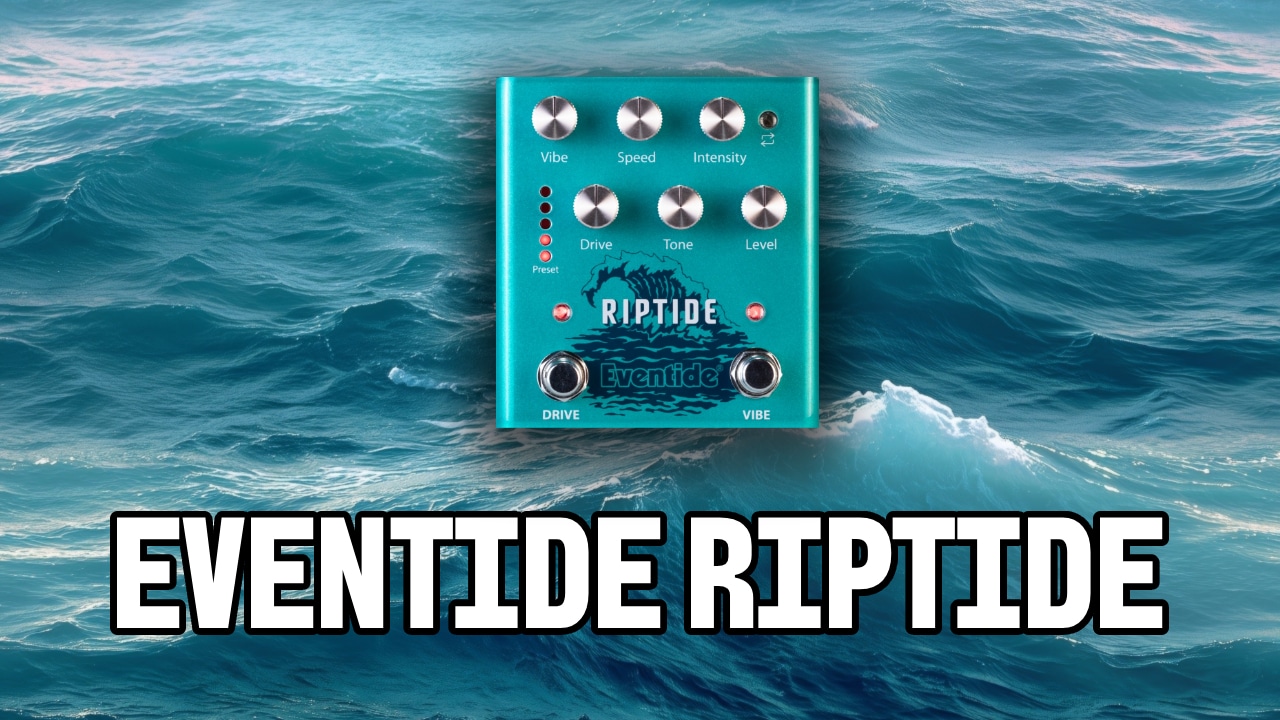
The Eventide Riptide is an ambitious hybrid effects engine that marries timeless Uni-Vibe-style modulation with gritty, expressive overdrive in one compact, stereo stompbox. Built around a dual-voiced approach to both modulation and distortion, Riptide gives players flexible tonal avenues that combine classic psychedelic swirling effects and a powerful crunch/overdrive. This pedal features seamless switching between effects, selectable presets, and stereo outputs. Having put it through its paces, it’s one of the more impressive two-pedals-in-one units I’ve seen in recent years.
THE ORIGINAL UNI-VIBE
The Uni-Vibe occupies a unique place in the history of guitar effects — it isn’t just another chorus or phaser, but a distinct modulation topology that carved its own sonic identity in the late 1960s. Originally designed by Japanese engineer Fumio Mieda and introduced under the Shin-ei brand as the Vibra-Chorus, the effect was later marketed in North America by Univox around 1968 as the Uni-Vibe.
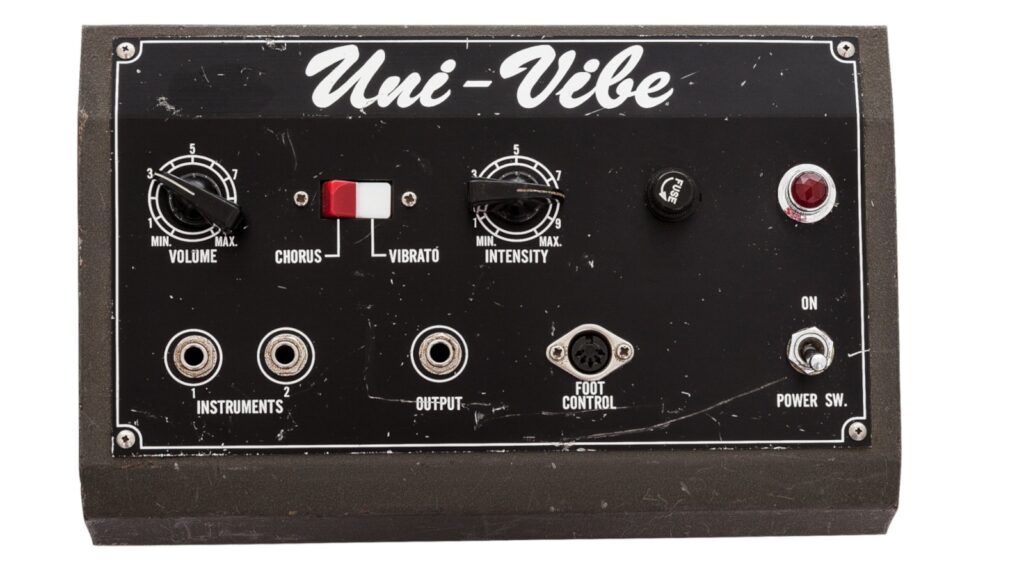
Unlike conventional modulation effects of its era, the Uni-Vibe doesn’t rely on standard op-amp phasing or simple delay-based chorus. Instead, its core circuitry uses a series of staggered phasing filters controlled by an optical LFO system: a small incandescent lamp illuminates an array of Light Dependent Resistors (LDRs), and as their resistance changes with the light, the signal’s phase response shifts in an uneven, organic pattern. This unique optical arrangement — absent from most phaser designs — gives the effect its throbbing, “living” sweep that many players describe as neither strictly chorus nor classic phaser, but something in between.
The effect includes both chorus and vibrato modes: in the former, dry and modulated signals blend to create a lush, immersive wash, while the latter removes the dry signal entirely, producing a more pronounced pitch modulation. This duality, combined with the optical phasing’s inherent imperfections and non-uniform sweep, contributes to the Uni-Vibe’s distinct character — often described as hypnotic, organic, and expressive.
“Machine Gun” which features Hendrix’s mastery of the Uni-Vibe
Although early marketing positioned the Uni-Vibe as a Leslie speaker emulator, Mieda himself noted that the inspiration was actually drawn from the sound of atmospheric modulation in shortwave radio signals, not rotary speaker physics. Regardless of its original intent, the effect quickly transcended its conceptual origins to become a hallmark of psychedelic, blues-rock, and ambient guitar tones.
Over the years, the Uni-Vibe’s iconic sound has been associated with landmark recordings and guitarists — from Jimi Hendrix’s swirling textures on Machine Gun to David Gilmour’s ethereal modulation on “Breathe,” and Robin Trower’s deep, expressive washes — cementing the pedal’s legacy as both a historical artifact and a perpetual source of inspiration for modern modulation designs.
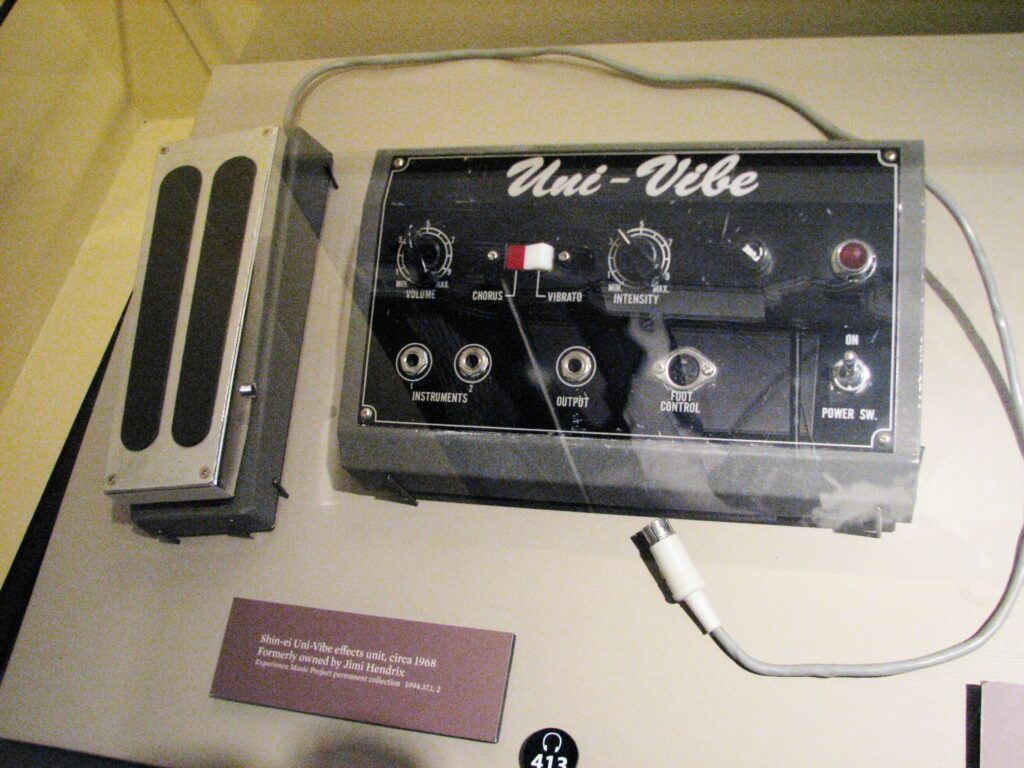
A Uni-Vibe originally owned by Hendrix.
CONSTRUCTION AND DESIGN
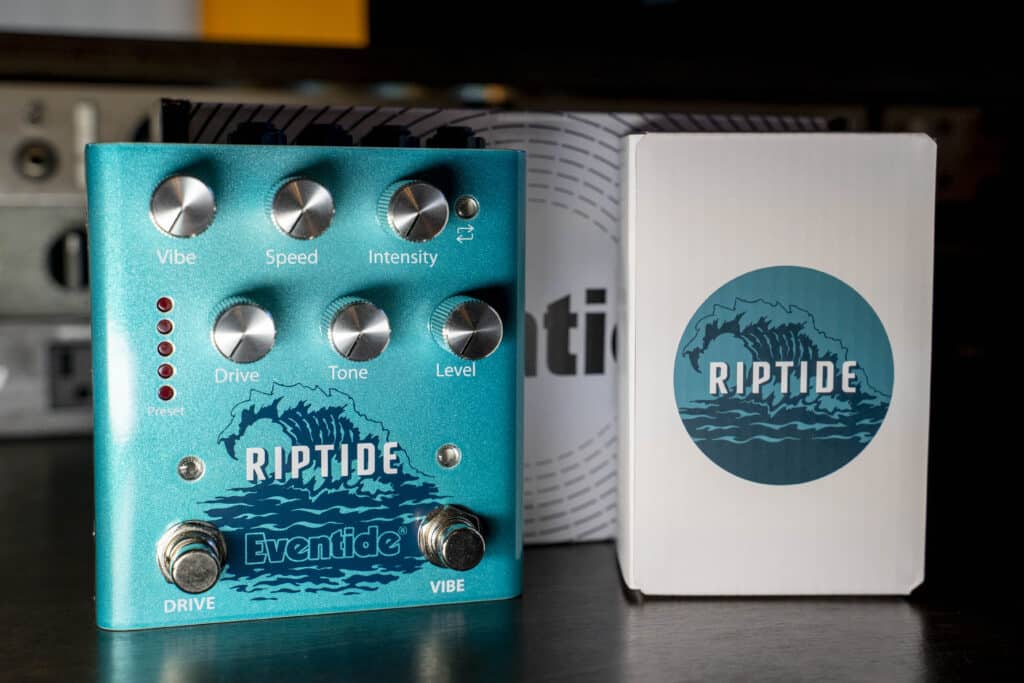
The unboxing experience for the Riptide is satisfying. Delivered in a high-quality box and packaging, the pedal comes with a power supply and USB adapter. The Riptide chassis is solid and moderate in size, which is impressive especially considering that it houses multiple effects. It has a layout that feels intuitive whether you’re tweaking a preset backstage or dialing in tones mid-set. Controls are clearly defined, and the dual footswitches — which can operate in either latching or momentary modes — add expressive flexibility. The inclusion of stereo outs and MIDI/USB connectivity (via a TRS MIDI cable or USB to computer) makes this a pedal that slots easily into both analog and digital rigs. Eventide Device Manager (EDM) software integration broadens its capability by letting players manage presets, update firmware, and assign expression pedal controls.
EVENTIDE RIPTIDE CONTROLS
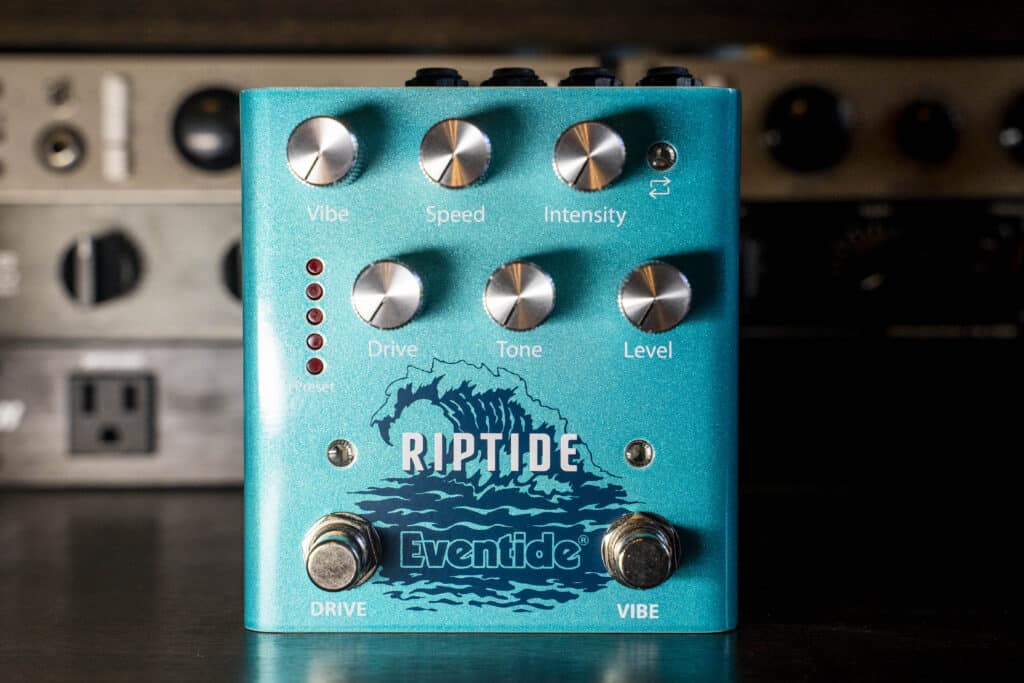
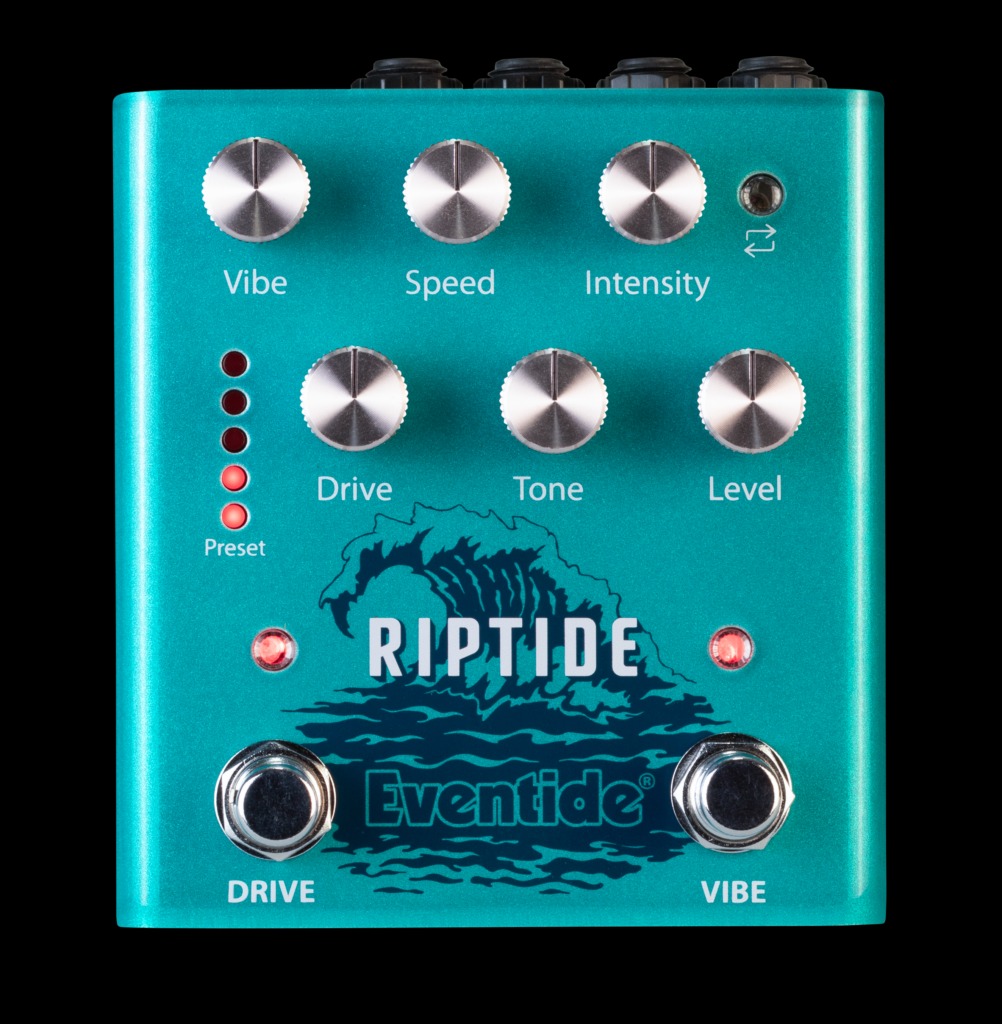
The Eventide Riptide features a front-panel layout that’s easy to grasp at a glance while offering enough flexibility for detailed tone shaping. The controls are divided logically between the Uni-Vibe modulation and overdrive sections, with additional switches and buttons that expand routing, voicing, and performance options without resorting to menus.
Knobs
Across the top panel, Riptide’s primary knobs govern the core behavior of each effect:
- Vibe
Determines the balance between dry and modulated signal. Around the midpoint, Riptide behaves like a traditional Uni-Vibe chorus, while higher settings push the effect toward a more pronounced, vibrato-leaning sound.
-
Vibe Speed
Sets the rate of the Uni-Vibe modulation. Lower settings produce slow, pulsing movement ideal for subtle texture, while higher speeds deliver classic swirling and rotary-style motion. -
Vibe Intensity
Controls the depth of the modulation. At lower settings, the effect remains restrained and smooth; turning it up increases the strength and character of the phase-like sweep. -
Drive Amount
Adjusts the amount of gain applied in the drive stage, ranging from nearly clean boost at lower settings to thick, expressive overdrive as the control is increased. -
Drive Tone
Acts as a tilt-style EQ for the overdrive circuit. Turning the knob left emphasizes a darker, warmer character, while turning it right adds brightness and presence for more cutting tones. - Drive Level
Overall output of the drive circuit.
Footswitches and Voicing Buttons
Riptide features two footswitches for hands-free control, supported by LED-lit buttons that expand each effect’s personality:
-
Drive Footswitch
Engages or bypasses the overdrive effect. When operating in Preset Mode, this switch also recalls the currently selected preset. -
Vibe Footswitch
Turns the Uni-Vibe effect on or off. Holding the switch allows access to Preset Mode, enabling quick navigation between stored sounds. -
Drive Voicing Button
Toggles between two distinct overdrive characters. The green voicing emphasizes dynamic response and mid-range grit, while the red voicing offers a smoother, more saturated drive with additional body. -
Vibe Voicing Button
Switches between two modulation styles. The green mode delivers a classic Uni-Vibe-inspired swirl, while the red mode deepens the phase character for a more dramatic, pronounced modulation.
A row of LEDs provides visual feedback for the active preset, making it easy to track saved settings and changes during performance.
Routing, Presets, and External Control
-
Effect Order (Swap Button)
Allows you to change the signal flow, placing the Uni-Vibe before the drive for traditional modulation-into-gain textures, or placing the drive first for a more aggressive, animated modulation response. -
Preset Storage
Riptide offers five onboard presets, enabling quick recall of favorite settings for live use or studio sessions. -
Expression and Auxiliary Control
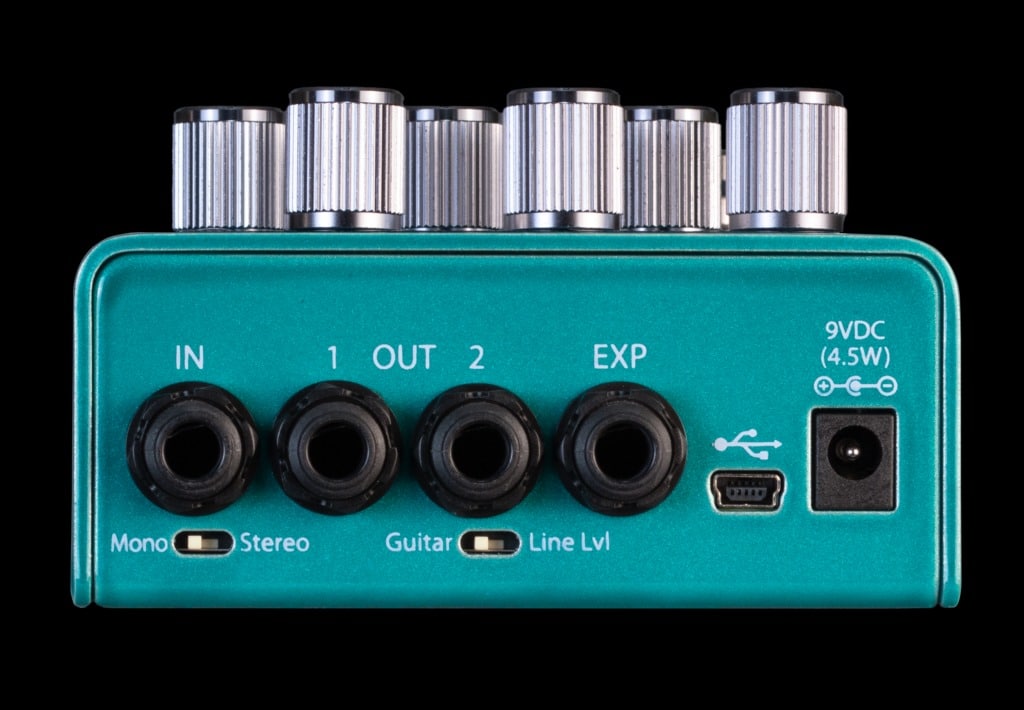
An expression input supports real-time control over selected parameters, allowing smooth transitions between sounds or dynamic modulation during performance. -
I/O and Bypass Options
Switchable mono or stereo operation, input/output level selection, and multiple bypass modes make Riptide adaptable to a wide range of pedalboards, amplifiers, and studio setups.
SOUND QUALITY AND APPLICATIONS
In practice, Riptide’s sonic range is impressive. Each of the effects feel authentic and full of character. Obviously, for psychedelic tones, the Vibe effect is a standout. The Drive is satisfyingly crunchy, and brings out the life in your guitar tone, regardless of which type of pickups you’re using. In combining the two sides of the pedal is where Riptide really shines.
The Uni-Vibe emulation feels rich and musical, particularly in stereo, where the modulation sweeps across the soundstage with fluid clarity rather than sounding phasey or artificial. The two overdrive voicings further expand Riptide’s tonal range, offering everything from classic, mid-forward crunch to a smoother, more amp-like saturation that works equally well for rhythm parts, blues-leaning leads, or pushing an amp without introducing harsh fizz. In a performance context, the onboard preset system and expression pedal support make Riptide genuinely road-worthy, while its stereo outputs and MIDI capabilities translate just as naturally into studio environments for layering and more nuanced production work. It also plays well with other pedals — I personally prefer placing Riptide before reverb, and paired just ahead of my SURFYBEAR COMPACT DELUXE spring reverb, the combination delivers a cohesively vintage character that feels both organic and inspiring.
FINAL THOUGHTS
By thoughtfully combining stereo Uni-Vibe emulation with dual-voiced overdrive, deep preset control, and flexible performance options, the Eventide Riptide delivers a unique and musically rewarding tool for players who want expressive modulation and gritty tone-shaping in one package. Whether you lean into dreamy psych textures or overdriven guitar work, Riptide feels like a pedal that’s ready to make a distinctive mark on any rig.
ABOUT EVENTIDE
Eventide Audio is a company with deep roots in both studio innovation and guitar effects, known for blending cutting-edge digital technology with musical sensibility. Founded in 1971 in New York, Eventide quickly became a respected name in professional audio, initially making inroads with high-end rack processors and early pitch-shifting devices that pushed the boundaries of what studio gear could do.
Over the decades, Eventide carved out a reputation for engineering excellence and sonic creativity. In the recording world, its hardware — and later plugin — effects became staples on countless hit records, prized for their pristine algorithms, flexible routing, and forward-thinking design. Eventide’s influence extended into the guitar pedal realm in the 2000s, where its stompboxes brought the same depth and performance ethos to players who wanted studio-class sound in a robust floor unit.
What sets Eventide apart is a consistent focus on musical usefulness and technical ambition. Whether it’s subtle modulation, complex pitch manipulation, or tightly crafted distortion, Eventide designs effects that reward exploration and adaptation across genres. Their pedals frequently straddle the line between classic inspiration and modern innovation, offering familiar tonal foundations with extensive control and creative potential.
Today, Eventide’s lineup spans analog emulations and purely digital designs, serving studio engineers, live guitarists, and sound designers alike. The company’s commitment to quality, thoughtful user interfaces, and ongoing firmware support has made its pedals, rack units, and plugins enduring tools for musicians and producers who want both precision and personality in their sound.
ABOUT THE AUTHOR
Ian Vargo is a Music Producer, Mix & Mastering Engineer, and Multi-Instrumentalist whose work has been heard on broadcast television, nationally televised ad campaigns, award-winning films, and viral web content amassing over 30 million views. His credits include projects for Disney | ABC, Intel, MSNBC, Airbnb, EA Games, and many more.
With over 20 years of experience in the studio, Ian has contributed to major label releases (Capitol, EMI, Fueled by Ramen, Universal, Interscope, Hollywood Records) as well as acclaimed independent projects. His passion lies in helping artists translate their creative vision into professional, release-ready recordings that stand out in today’s music landscape.
Interested in working together? Reach out at ianvargo@gmail.comif you need mixing or mastering for your next project.